



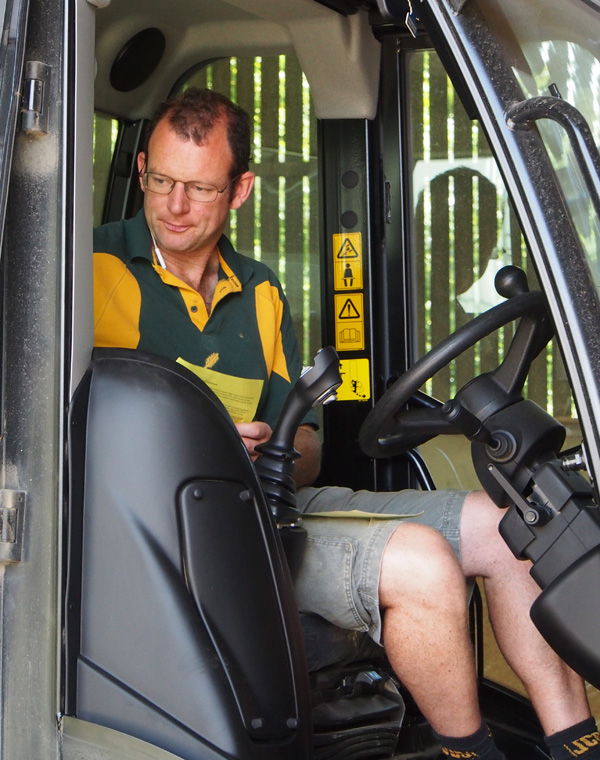
 The ups and very low downs of farming: on July 29 George Hosier heard that bovine TB tests had found two ‘reactors’ on Manor Farm, at Wexcombe, near Burbage. But, on the plus side, by August 2 he was halfway through the harvest – and that was the date last year they began their harvest.
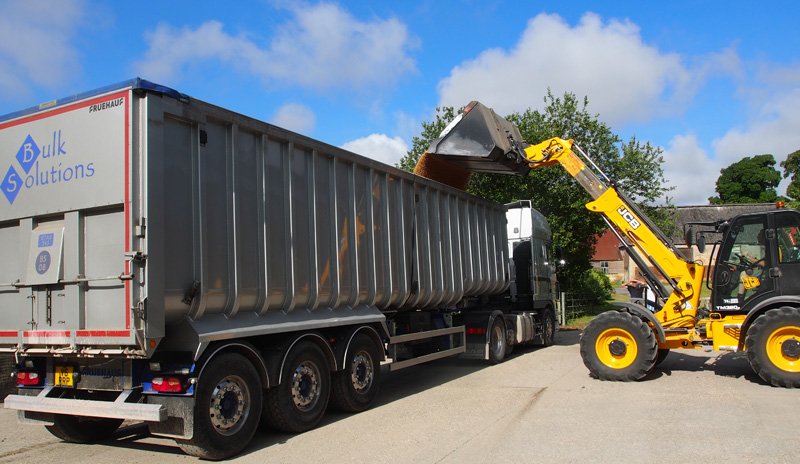
When Marlborough News Online went to talk to George about the TB (August 7), he was busy loading three trucks with wheat – on its way to Andover for biscuits. Then as soon as the night’s dew had lifted, it was back to the harvest making the most of the clear day before the remnants of Hurricane Bertha threatened a forced pause.
The Hosiers farm 1,500 acres at Wexcombe – it’s a mixed farm mainly arable, but with 50 cows, two bulls and a small herd of Wiltshire Horn sheep – an old breed of sheep that lose their wool so do not need shearing. Those cows mean there are generally about 150 animals on the farm at any one time.
These animals are tested for bovine TB every 60 days. This time a cow and a 12 week-old calf proved positive and the evening before our visit they had been taken away.
The cow and calf had never been in contact – kept in different parts of the farm. The calf was one of the strongest and healthiest on the farm: “A real cracker.”
The vet thought that was probably its downfall: “It was probably more adventurous and strayed further – it only had to eat some grass peed on by a badger.”
George is certain that badgers are a big part of the problem. The disease is not being spread by the movement of cattle because restrictions are so rigid. He points to a spike in TB cases after the foot and mouth outbreak of 2001 when movement restrictions were eased a little to allow farmers to re-stock.
 Badgers have no predators to keep their numbers down: “Badgers have plenty of food, therefore their numbers are growing and growing.” There are badger setts on the Hosiers’ farm.
Telling colleagues about the TB tests, George Hosier said :“I can’t see any end to it till wildlife is sorted out.”
Marlborough News Online asked him what the answer was: “I don’t think anyone can stomach widespread culling.” But he does want to go back to the policy of the 70s and 80s when gassing of badgers was allowed on farms that had bovine TB.
He points out the relative lack of action across the nation to stem the disease and compares England with New Zealand. There culling of possums (which spread the disease just like badgers do here) began when cases of bovine TB reached 0.06 per cent of the nation’s cattle. Here it has already reached about 0.6 per cent of the national herd.
Learning of the Hosiers’ bovine TB cases, Devizes MP Claire Perry said she would hold a forum next month to find out how bad the situation has become in the constituency and what to do about it. George Hosier welcomes her initiative: “It’s brilliant news.”
The number of cattle slaughtered after positive bovine TB tests was 11,689 for January to April this year – compared to 12,003 for the same period last year. And in April the government outlined plans to eradicate the disease by 2038.
The latest available breakdown for the number of ‘reactor’ animals slaughtered in Wiltshire is for 2012: 1,338. Each one a severe blow and cost to the farmer and a cost to taxpayers too.
The financial costs are huge: taxpayers have spent about £500m in the past ten years to control the disease. And it is reckoned it might cost £1bn over the next ten years if no more preventative measures are taken.
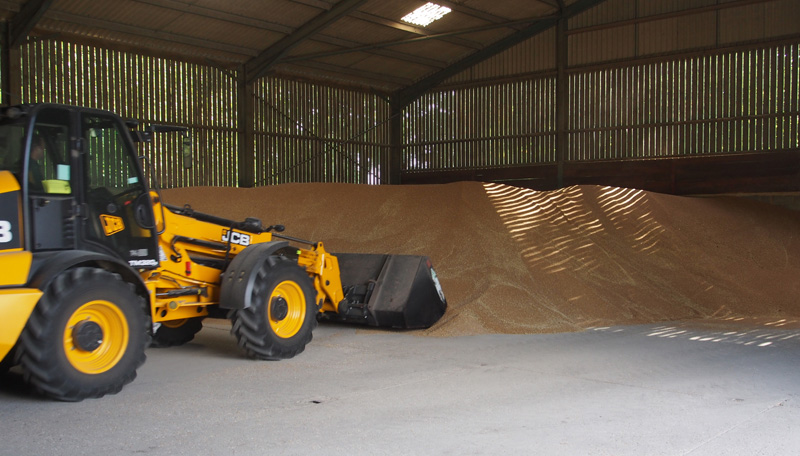 Meanwhile the harvest must go on. As George says there’s too much going on to get too upset.
The Hosiers have been farming here since 1920 when George’s great grandfather Arthur J. Hosier bought the farm. He was an innovator and invented the mobile milking bail that still bears his name.
As another 29,500 kilograms (or 29.5 tonnes) were driven away – it happened to be the day the National Farmers Union were making a point about the sustainability of Britain’s food supplies.
Thursday, August 7 was, the NFU said, the day Britain’s food supply would have run out if we shad topped importing food. That claim makes the Hosiers’ wheat look very important indeed – and this year’s wheat, it is reported, is looking good – a good heavy crop.


