




 Wiltshire Council has started a consultation process on the proposed amalgamation of St Mary’s Infants and St Peter’s Junior schools. This pre-supposes the go-ahead for combined school premises in a new building on the site on Van Diemens Land, just east of St Mary’s School.
A series of meetings have been arranged to allow the two current governing bodies, staffs and parents to ask questions and air their views. The final two meetings for staff and parents are on Monday (September 15.)
The consultation documents reveal that talks between the Department for Education and Wiltshire Council have already begun – three months earlier than previously planned. The consultation lasts until October 17 and the target date for opening the new school is still, as reported by Marlborough News Online a year ago, September 2016.
The route to amalgamation is complex with the final decision being made by the Wiltshire Council member for education, Councillor Richard Gamble, by 21 January 2015.
However, amalgamation seems a foregone conclusion as the document states that both the head teachers and both governing bodies support the amalgamation. The main argument in favour is that continuity of schooling at primary level has distinct advantages for children especially those with special needs.
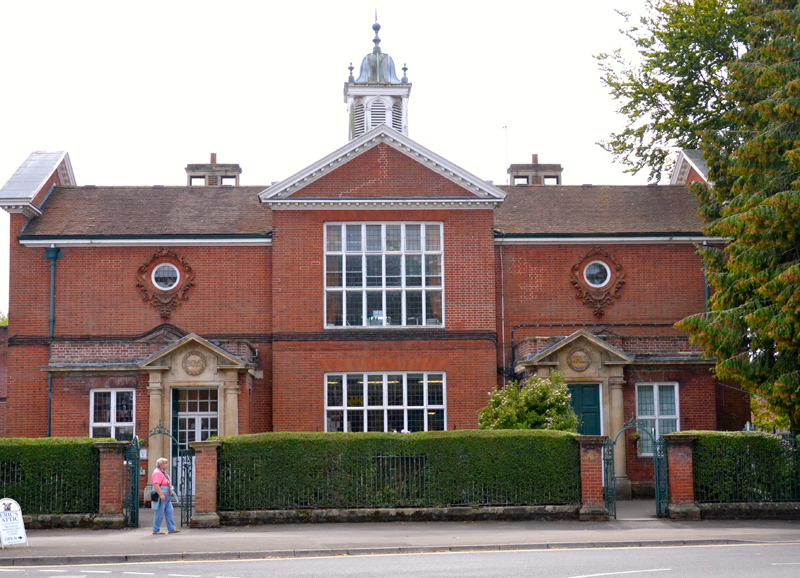
Unsurprisingly the documents do not say that St Peter’s – though a friendly, popular and successful school – is close to being unfit for purpose. It was built in 1904 as the town’s grammar school, is Grade II listed and has small rooms and many staircases.
It has been judged as “completely inaccessible for physically impaired pupils”. Over half the classrooms and the school hall are upstairs. Installing a lift would not, it was thought, get planning consent and would be hugely costly.
St Peter’s has no grass play area.
 St Mary’s was built in 1974. Its buildings are considered to be “not ideal” but are not in poor condition like those at St Peter’s. They do include some temporary buildings.
Of Wiltshire’s 189 primary schools only eight are infant and eight junior rather than being combined primaries. The new school will be a Church of England Voluntary Controlled school – as are the existing schools.
Before the coalition government pulled the plug on building Marlborough’s new primary school in 2010, plans had been drawn up and planning permission was granted. However, it is not clear whether the plans fit current government policies.
The planned space provision may be too generous for current regulations. The coalition government says schools must be 15 per cent smaller than those built under the previous government. Standardised designs are now being used.
There is also the issue of the provision for special educational needs pupils which was not covered by the original cost estimate. In the year 2012-2013 the two schools catered for 20 pupils with special educational needs.
The consultation documents say that the new school will include a Complex Needs Resource Base to provide specialist staff and facilities for children with a variety of different needs. This was not on the original plans.
The consultation documents have been sent to ‘stakeholders’ including current parents, parents with children now at pre-schools in the area, feeder nurseries, the unions, Marlborough Town Council, the MP, Salisbury Diocese Board of Education and a number of other oganisations. But copies are held at the library and can be downloaded from the relevant Wiltshire Council page.
 Crowds flock to Pewsey and Burbage to see the Tour of Britain peloton

