




 Avebury World Heritage Site
 Avebury World Heritage Site
There are several tourist attractions that make up Avebury’s prehistoric landscape. All of the monuments are open to the public and accessible without charge, although parts of the neolithic Avenue pass through private land, and are not accessible.
Built in around 2600 BC, Avebury stone circle is a neolithic henge monument containing three stone circles, and contains the largest stone circle in Europe.
The monument comprises a large henge, surrounded by a bank and a ditch. Inside this henge is a large outer stone circle, with two separate smaller stone circles situated inside the centre of the monument.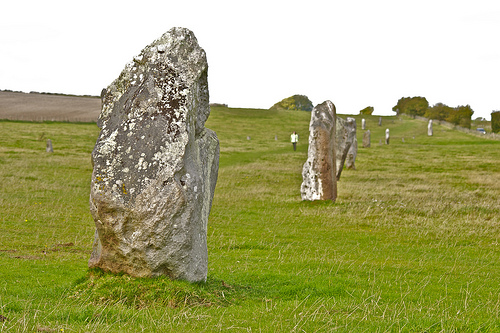
An avenue of two parallel lines of stones 25m wide and 2.5 km in length, called The Avenue, runs between Avebury and The Sanctuary. Although it is impossible to follow The Avenue in its entirety, without the permission of the private landowners through whose gardens The Avenue runs, there is enough on public land to make a stroll back towards the A4 and Silbury Hill worthwhile.
West Kennet Long Barrow is a Neolithic tomb or barrow, situated near Silbury Hill, one-and-a-half miles south ofAvebury.
The chambered long barrow – one of the longest in Britain at 100m – has two pairs of opposing transept chambers and a single terminal chamber used for burial.
Archaeologists reckon construction started in 3600 BC – 400 years before work started on Stonehenge – and that it was still in use in around 2500 BC.
Silbury Hill is an artificial chalk mound near Avebury. At 121 ft high, Silbury Hill is the tallest prehistoric human-made mound in Europe and one of the largest in the world.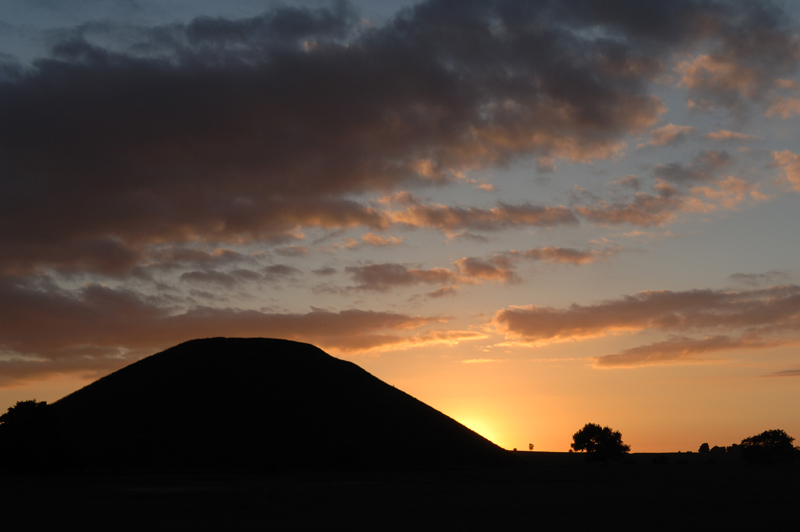
Archaeologists calculate that Silbury Hill was built about 4,750 years ago and that it took 18 million man-hours, or 500 men working for 15 years to construct.
Its purpose, however, remains shrouded in mystery. Excavations from the 17th century onwards have produced plenty of artefacts, but no reasons for its construction.
The Sanctuary is a prehistoric site on Overton Hill. Archaeologists believe that in around 3000 BC the site comprised six concentric rings of timber. These were replaced in around 2100 BC with two concentric stone circles.
Sadly the monument was destroyed in the 1700s. Concrete posts now mark the site of the timbers and stone rings.
The Alexander Keiller Museum features the prehistoric artefacts collected by archaeologist and businessman Alexander Keiller.
The museum is located in the 17th-century stables gallery, in the centre of Avebury village, and is operated by English Heritage and the National Trust.
The nearby 17th century threshing barn houses a permanent exhibit gallery about Avebury and its history. Admission includes both galleries.
Avebury Manor and Garden is a National Trust property consisting of an early 16th-century manor house and its surrounding garden. Parts of the house, and the garden, are open to the public.
Avebury is the site of several religious ceremonies, notably at sunrise on midsummer’s day (June 21) when pagans including druids, wiccas and heathens celebrate inside the stones at Avebury. It is quite a spectacle, and for those who don’t fancy an early rise there is usually still some activity until lunchtime and beyond.
The pagans are very welcoming, and don’t object to a bit of gawping, photography or even hand-holding and chanting participation, but casual visitors should be reminded that religious ceremonies are taking place, and respect is always appreciated.
 Crofton Beam Engines
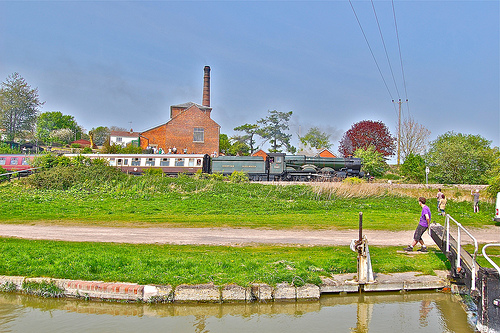
Crofton houses the world’s oldest working beam engine – a Boulton and Watt engine installed in 1812. Alongside it is a second ‘younger’ beam engine made by Harvey & Co installed relatively recently – in 1846.
The station started work in 1809 pumping water up to the canal’s highest level – the section between Crofton and Burbage, which was above any reliable local water source.
Crofton’s engines are often in steam on bank holiday weekends during the spring and summer months. If you stay around long enough when you visit Crofton on those days you will see both engines working at the same time – a dramatic sight and a dramatic noise.
The beam of the older engine weighs six tons; that of the more sophisticated Harvey engine weighs four and a half tons. They pack an awesome punch.
 Kennet and Avon Canal
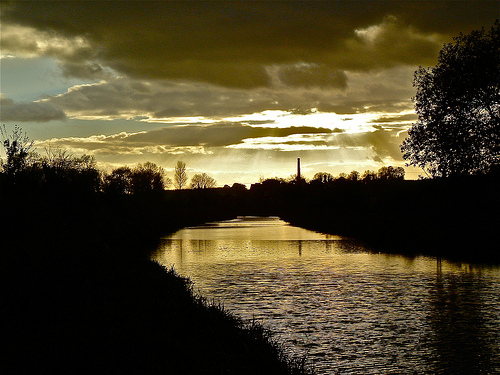
The canal was constructed between 1974 and 1810 to connect the River Avon at Bath and the River Kennet at Newbury, creating a water transitway between Bristol and London.
The canal section is 57 miles long, and the navigable stretch, including the rivers, is 87 miles.
In the late 19th and early 20th centuries, the canal gradually fell into disuse after the opening of the Great Western Railway.
In the latter half of the 20th century the canal was restored in stages, largely by volunteers. After decades of dereliction and much restoration work, it was fully reopened in 1990. The Kennet and Avon Canal has been developed as a popular heritage tourism destination for boating, canoeing, fishing, walking, and cycling, and is also important for wildlife conservation.
There are more than 100 locks on the canal, the most famous being at Caen Hill near Devizes, which has 29 locks, and takes between five and six hours for barges to navigate.
Locally, the canal passes by or through Pewsey, Wootton Rivers, Burbage, Crofton, Great Bedwyn, Little Bedwyn and Froxfield. At Burbage the canal passes though The Bruce Tunnel, the only tunnel on the entire route.
At 502 yards long, the tunnel – which took three years to construct – is named after Thomas Brudenell-Bruce, 1st Earl of Ailesbury and warden of the Savernake Forest, who would not allow a deep cutting through his land and insisted on a tunnel instead.
There is no towpath through the tunnel, and walkers and cyclists must walk across the top of the hill. When canal boats were still pulled by horses, the boatmen had to haul boats through the tunnel by hand, pulling on chains that ran along the inside walls.
 Savernake Forest
At 4,500 acres, the Savernake is the largest privately-owned forest in Britain. Owned by the Earl of Cardigan and his family, since 1939 the running of the forest has been undertaken by the Forestry Commission on a 999-year lease.
The forest is mostly open to the public, although visitors are encouraged to stick to footpaths when crossing farmland, and there are a number of private residences.
The Savernake is an ancient forest. The Saxons called it the Safernoc. Aroyal forest was established in the 12th century, when it extended to an area of some 150 square miles.
King Henry VII used to visit the forest warden, Sir John Seymour, for a spot of deer hunting, and it was on one such expedition that he met Jane Seymour.
The high point for the forest is considered to be the period between 1741 and 1814 when Charles Bruce and his nephew Thomas Bruce-Brudenell were custodians of the forest.
Lord Thomas Bruce, the Earl of Ailesbury, governor to the King George IV, employed Capability Brown to plant great beech avenues in Savernake Forest, which was then some 40,000 acres, nearly ten times its present size.
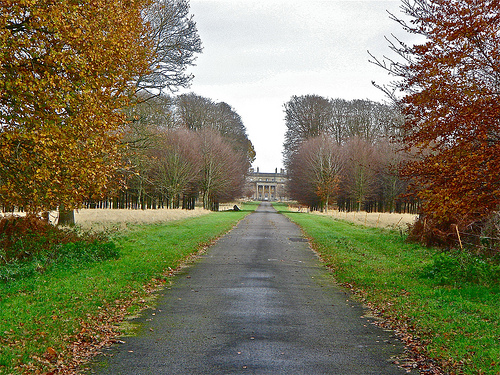
These included the Grand Avenue, running through the heart of the forest, and which at 3.9 miles stands in the Guinness Book of Records as the longest tree-lined avenue in Britain.
The Grand Avenue runs from the outskirts of Marlborough to Tottenham House. The Grade I listed building has 100 rooms and dates from around 1820, where it was built on the site of previous homes.
For much of the 20th century, the house was rented to Hawtreys Preparatory School, a feeder school for Eton. The school buildings were requisitioned by the War Office during the Second World War, and during the early stages of the war the forest became an ammunition dump, where up to 22,000 tons of high explosives and other ammunition was stored.
In 2006, Tottenham House, with its stable block, outbuildings and some farmland, was leased for 150 years to a consortium of Euro Property Holdings, Conduit Investments and the Buena Vista Hospitality Group of Tampa, Florida, to become a luxury hotel and golfing centre, although the economic downturn seems to have brought a temporary halt to proceedings.
In 2008 the band Radiohead recorded their album In Rainbows at the house.
Although the house and parkland are not open to the public, a public footpath from the hamlet of Durley to the pretty forest church of St Katharine’s – built in 1861 as a chapel of ease to Great Bedwyn – runs closer to the building that views from the main road would allow.
 Wilton Windmill
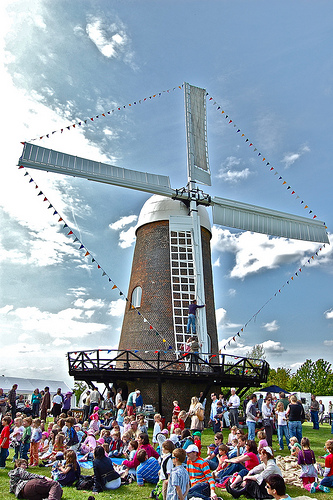
Wilton Windmill is the only working windmill in Wessex producing stone-ground, wholemeal flour.
Wilton Windmill, which was built in 1821, is open for guided tours on Sundays and Bank Holiday Mondays between 2pm and 5pm, from Easter until the end of September.
 Marlborough Tourism

