







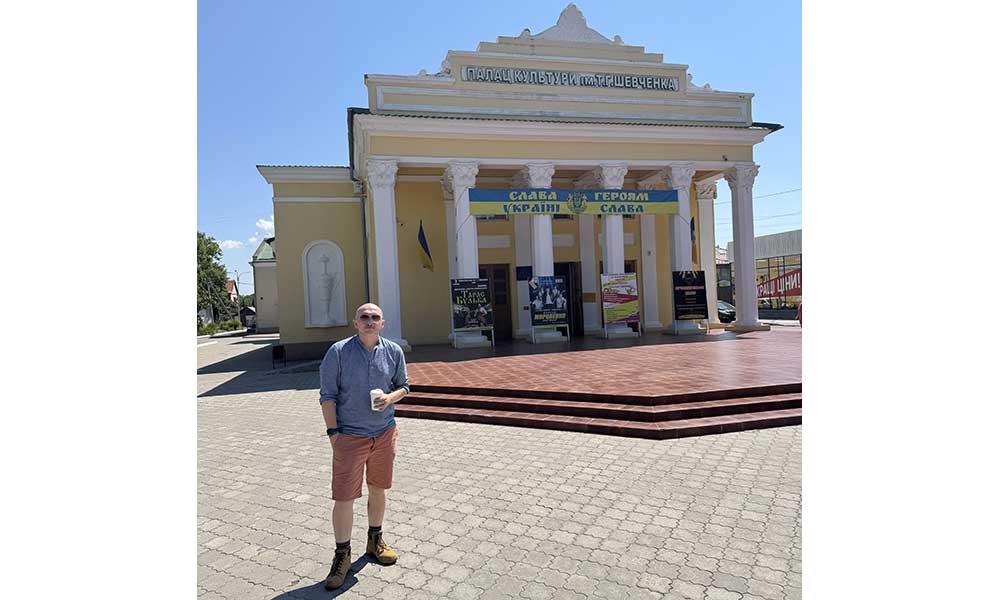
The first thing I heard was the explosion. In the dark of a Chernomorsk night, after too much vodka and too little sleep, I staggered to the balcony and saw the sky lit up with fire—drones exploding over the port of Odesa, anti-aircraft guns hammering back. Just hours earlier, I’d been sharing borscht and toasts with “Alex,” a frontline medic who would soon take possession of the car I’d driven over 2,000 miles from Marlborough. Now, I was watching the war he lives with every day unfold in real time.
Getting there wasn’t easy. From France to Romania, the journey was long but uneventful—more like a continental driving holiday, but without the tourist stops. Me and the Tiguan, “Tig” for short, were heading for Odesa, where it had been arranged I’d meet Alex. I’d wave goodbye to Tig, while Alex would take it to a new life—one where it would serve not just him, but many others in need on the front line.
Romania’s roads were smooth, but the real challenge came at the Ukrainian border. Among the parcels I was delivering for the charity HUGS was one odd item: a foot spa massager. The Customs Officers had never seen one before. Between my broken Ukrainian, their broken English, and a lot of Google Translate, I found myself sitting in a bare corridor for over an hour while they inspected every line of my paperwork. Eventually, they waved me through with a bemused smile.
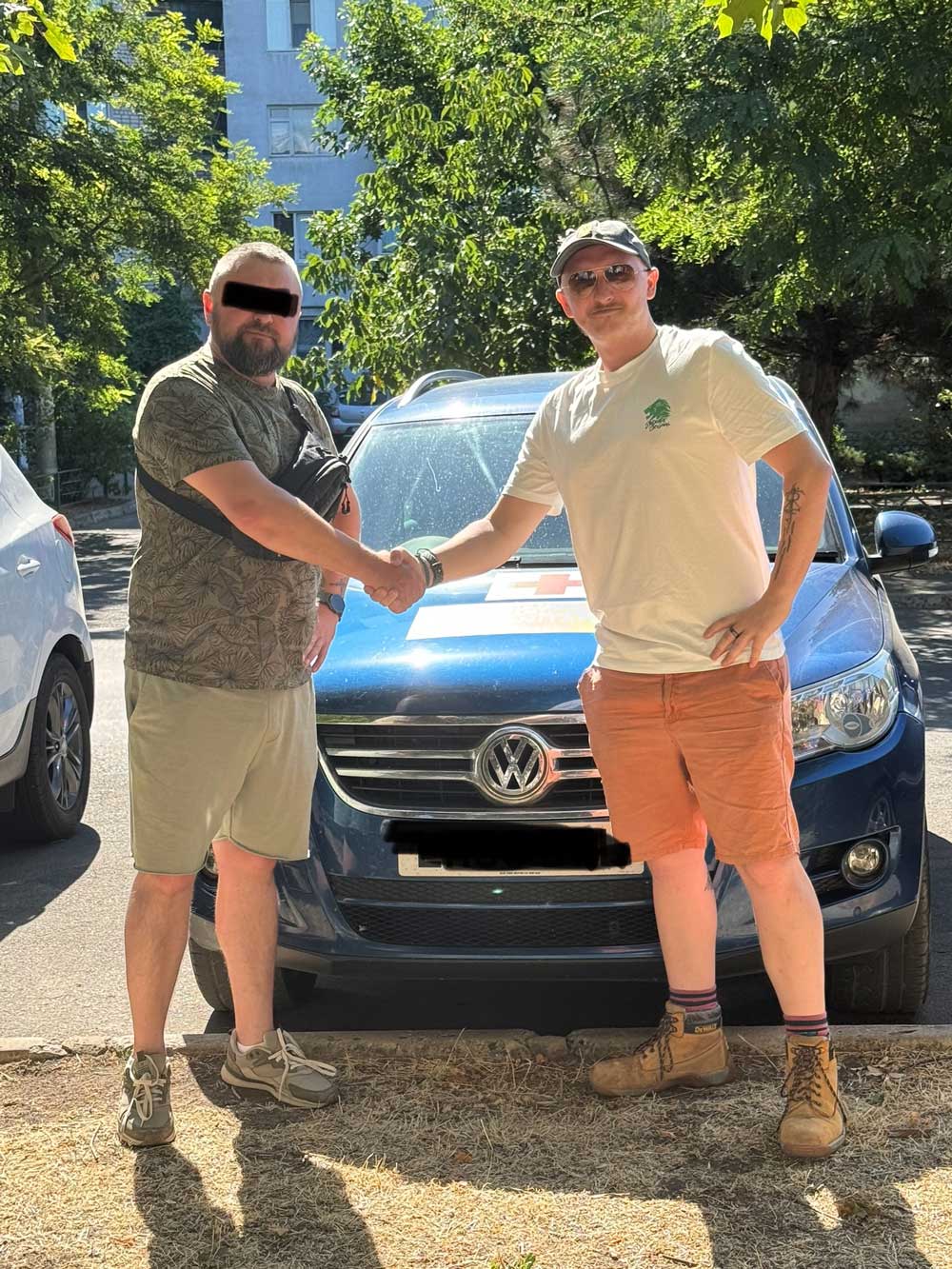
In Izmail, a kind stranger spotted me wandering the streets looking for coffee and cash. She took me under her wing, guided me to a café, and pointed me towards an ATM. From there, it was a non-stop drive to Chernomorsk, where Alex greeted me with a firm handshake and a cautious smile. His English was as limited as my Ukrainian, but technology bridged the gap, and by the end of the day we were laughing like old friends.
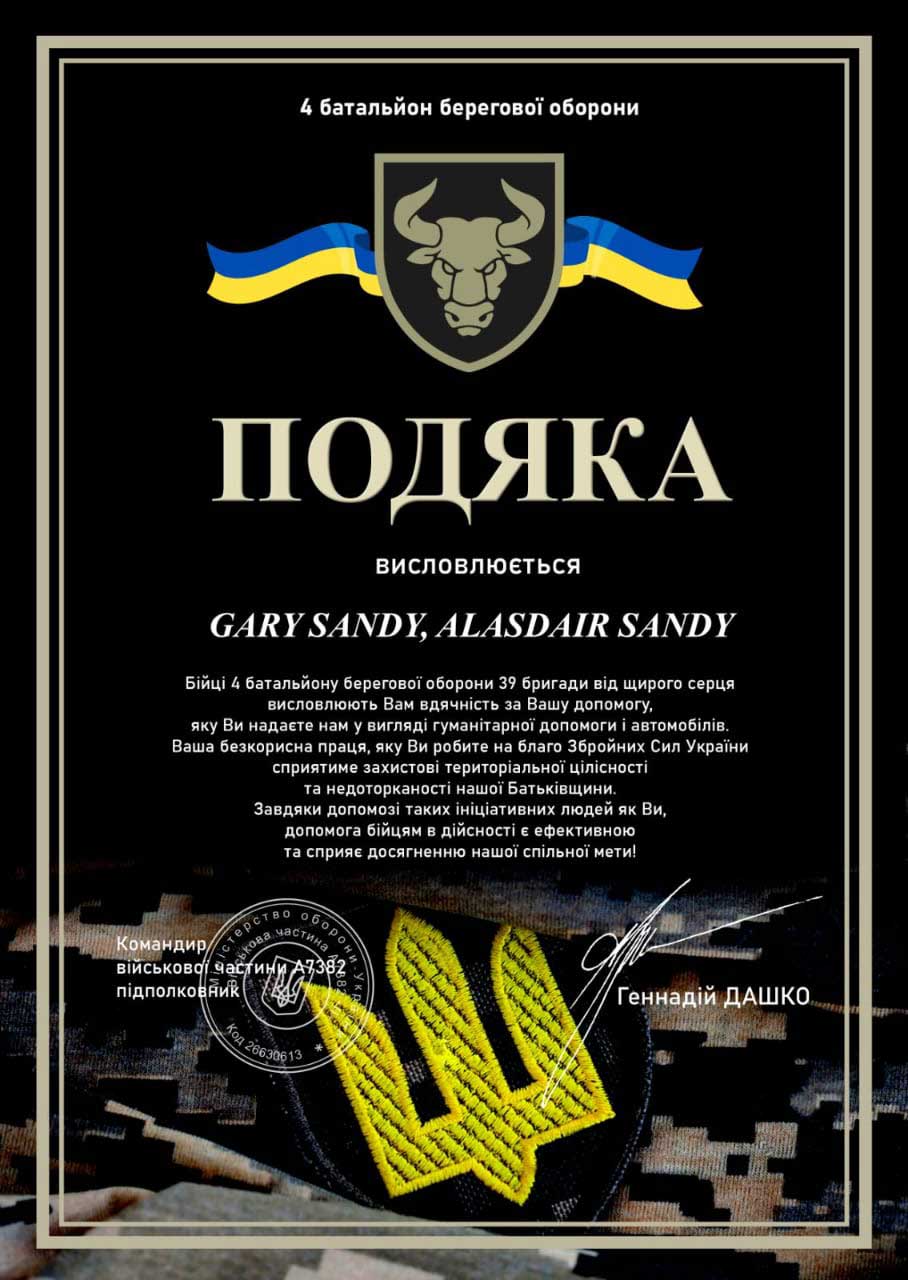
Alex showed me the city’s memorial park for fallen soldiers, and later, the spoils of war—wrecked Russian drones and the counter-drone devices used to bring them down. No photographs were allowed, but the jagged, twisted metal spoke for itself. His team presented me with a letter of thanks, a gesture heavier than any souvenir I could carry.
That night, we celebrated. But in the small hours, reality intruded again. I will never forget the sound of those blasts, the streaks of light cutting across the night sky, or the knowledge that while I would soon leave, Alex would face this again and again.
The next morning, over beetroot juice—Alex’s hangover cure—we signed the handover paperwork. Tig would now ferry the wounded, deliver aid, and keep a medic alive at the front. I was sorry to see Tig go; we’d built a strange sort of bond on the journey from Marlborough, confirmed by its faultless performance across Europe. But knowing it would now be saving lives in Ukraine made the farewell easier.
Leaving Ukraine was smoother, lightened by jokes with border guards and an impromptu lift from Romanian customs. But as I watched the country disappear in the ferry’s wake, I knew the journey had changed me. In Ukraine, amid war, I had found kindness, humour, and an unbreakable will to survive. In Alex’s hands, that little car would keep hope moving forward.
And this won’t be the last. As soon as I can, I plan to drive another car into Ukraine — “Tig 2,” perhaps — another lifeline, another act of solidarity. It’s only through the generosity and spirit of our local community that I can make these missions happen, and together, we’ll keep that road to hope open for as long as it takes.

 St John’s celebrates outstanding A-Level results