


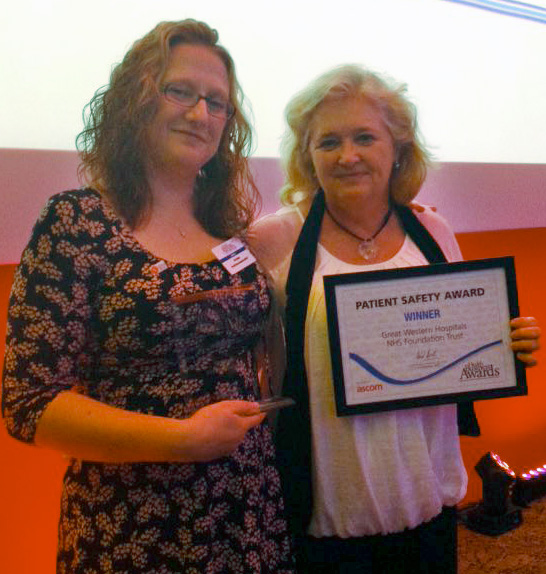
 A team of nurses, doctors and pharmacists who tackle the life-threatening condition of sepsis at Great Western Hospital have won a national award in recognition of their lifesaving work. The multidisciplinary team were given the Patient Safety accolade at the 2015 Health Business Awards last week.
The Patient Safety Award goes to the NHS trust which has “made great strides in providing a safe hospital environment for patients and has taken action to reduce hospital acquired infections and mortality rates.”
Specialist Sepsis Nurse Nic Lythell explained: “Sepsis is one of our Trust’s safety priorities and we work hard to identify and treat sepsis as quickly as possible and before life-threatening damage has been caused. The fact that more and more patients are surviving sepsis is testament to the vital work that we are doing. Speed really does save lives.”
Sepsis, previously known as septicaemia or blood poisoning, is the body’s reaction to an infection where it attacks its own organs and tissues. It can start from any minor infection, such as a chest or urine infection or an infected bite or wound and is difficult to diagnose. The sooner treatment begins, the better the outcome. If not treated within six hours, it can be fatal.
Over 37,000 people lose their lives to sepsis each year in the UK. Between May 2014 and March 2015, 830 patients were identified with severe sepsis at GWH – a third more than had been expected. Currently, 80 per cent of sepsis patients at GWH survive, which is significantly better than the national average of 65 per cent.
Successful treatment of sepsis is one reason why GWH is scoring so well on its Hospital Standard Mortality Rate (HSMR) figures. Against the nationally expected mark of 100, the latest figure for GWH is July’s 83.26: “We’re saving,” the GWH’s recent board meeting was told, “more lives than is expected.”
GWH’s HSMR rating puts it fourth of the thirty-four acute hospital trusts in the south of England.


