




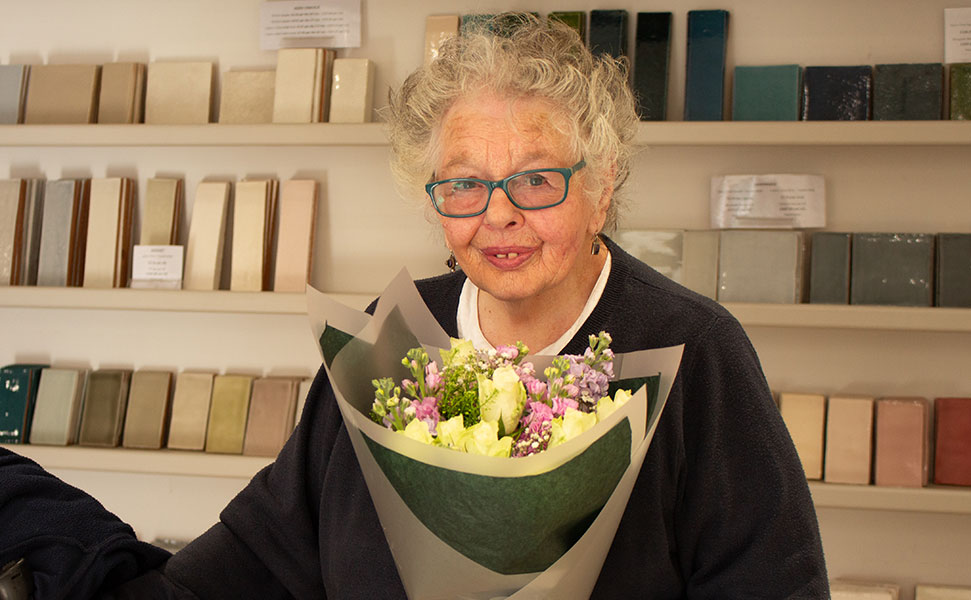
Andrea West who started as a hand painter at Marlborough Tiles in the fifties recently returned to the workshop after sixty three years as a special visit to mark the 90th anniversary of the business. Now nearing eighty-five Andrea’s time at the business finished before it was even called ‘Marlborough Tiles’ when she left it was still ‘Packard & Ord’.
Andrea’s return represented a moving moment for the team. Offering a rare opportunity to reflect on the artistry, dedication and meticulous craftsmanship that have defined Marlborough Tiles for generations. A celebration of her personal legacy and a tribute to the enduring craftsmanship that is Marlborough Tiles today.
She was part of the team who created many of the individual decorative tiles, tiled trays and larger mural projects, including work that remains part of Marlborough Tiles’ heritage today.
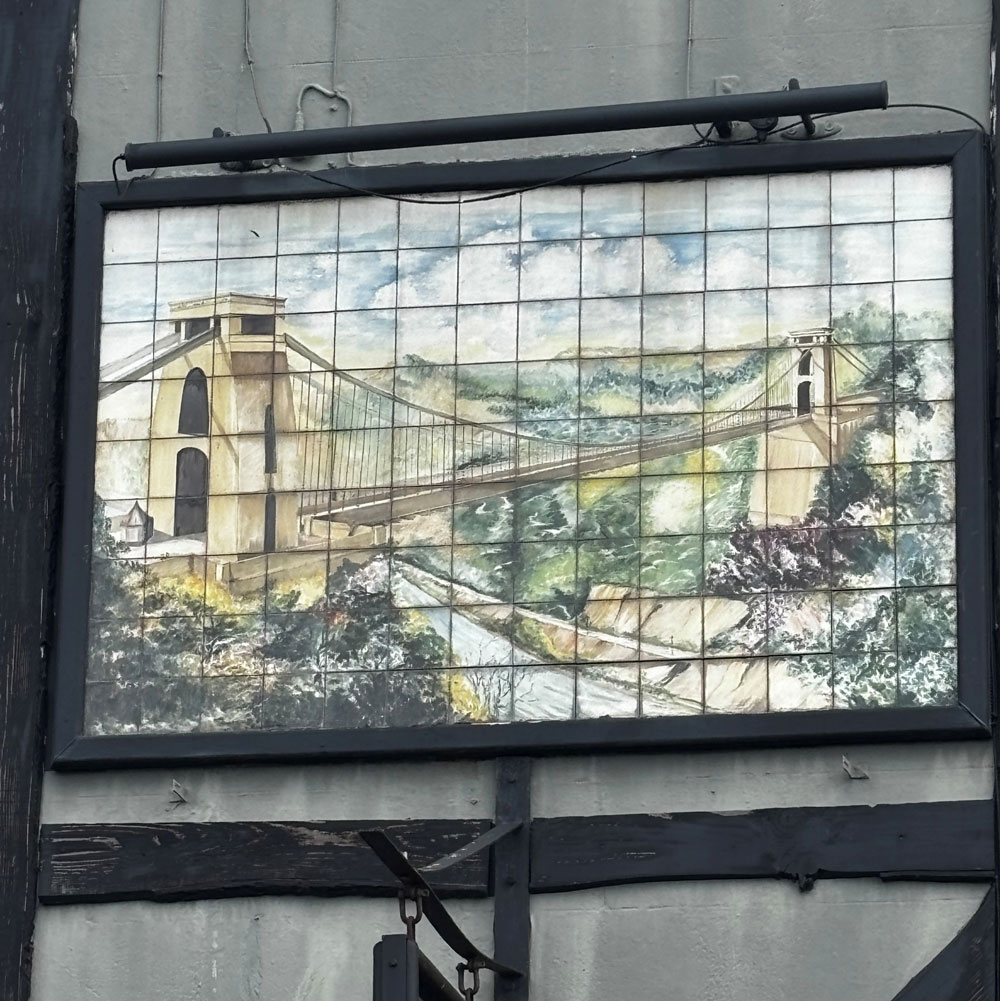
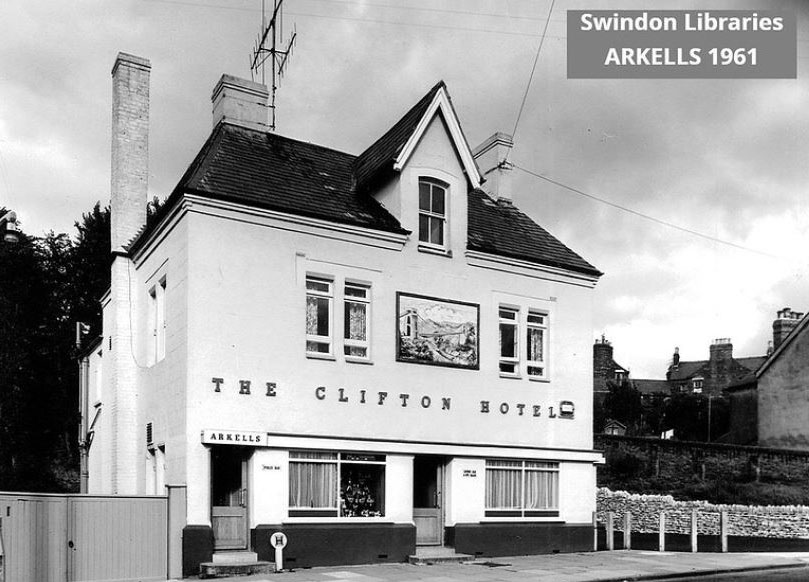
One notable project from that era was a tiled mural depicting Clifton Suspension Bridge, created in the late 1950s by Andrea and her colleagues, who also undertook commissions for Queen Mary.
The mural was installed above the doorway of The Clifton pub in Swindon’s Old Town and was later rediscovered during a recent refurbishment by the current tenant, Vicky Aghabi. Hidden beneath old signage, the mural was uncovered and is now proudly on display, bringing the building “back to life” and serving as a lasting testament to the craftsmanship of Andrea’s era.
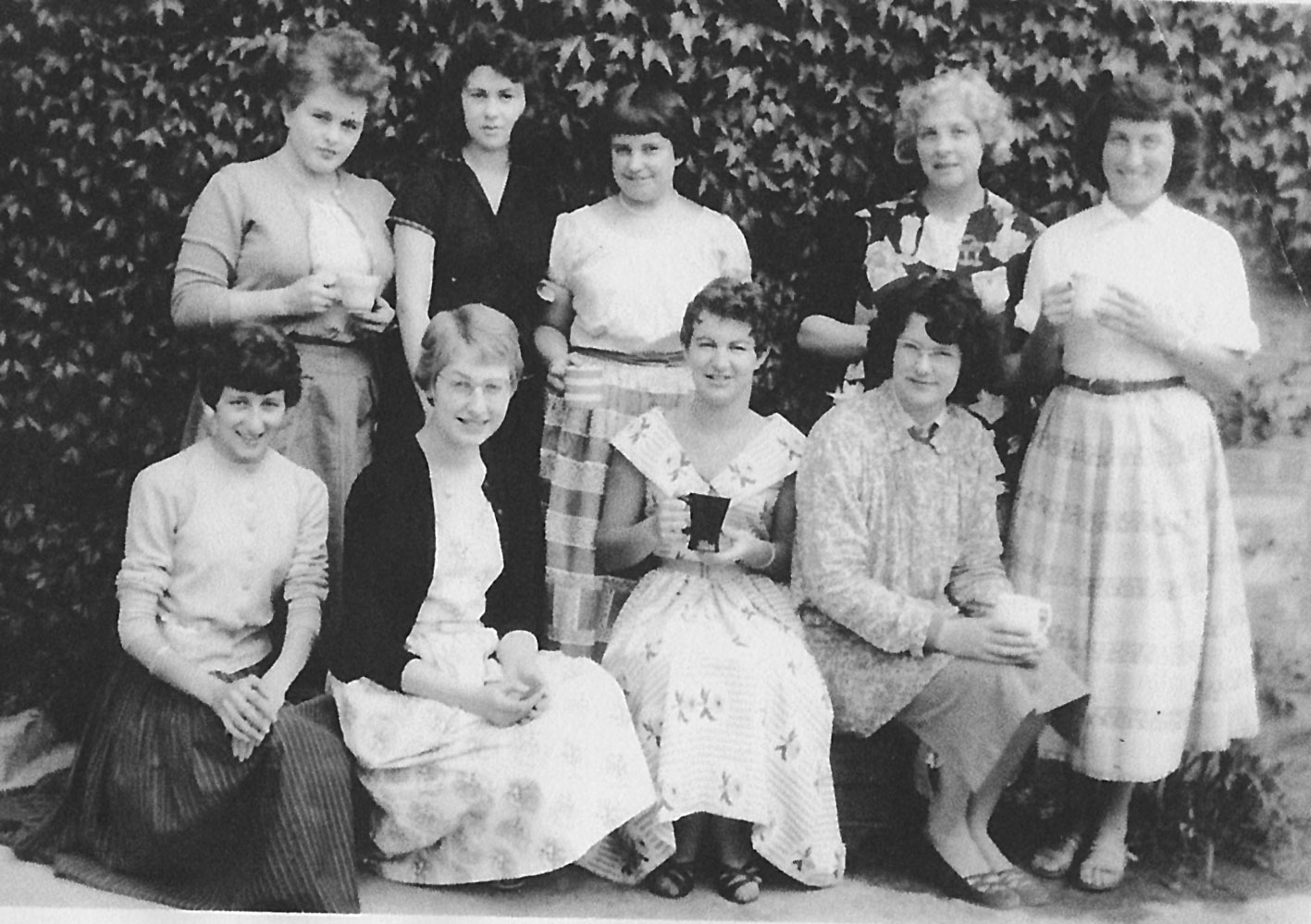
This year it’s Marlborough Tiles’ 90th anniversary. Noted above the business was founded in 1936 by two Slade-trained artists, Rosalind Ord and Sylvia Packard.
During her visit, Andrea shared vivid memories of the traditional techniques she used. She explained how, much like today, designs were carefully transferred onto tiles using a pounce and a small bag of charcoal – affectionately called a “muck bag” – before being meticulously painted by hand using powder stains blended with oil and other ingredients. Depending on the effect required, decoration was applied either to the bisque before glazing or onto already glazed and fired tiles. Each tile was carefully checked by co-founder Rosalind Ord, with any imperfection requiring a repaint, ensuring the highest quality standards.Hand painters worked at the Barnfield workshop, after which the tiles were transported to the current site for firing in batch kilns -a process that could take up to a full day.
Ninety years on and still going strong as one of Marlborough’s important and heritage businesses. But has much changed across those ninety years? Technology has helped, enormously, but the core skills of design and artistry and craftsmanship, not really. As important to success now as they were back in that pre-WWII period.
 February weather in Marlborough – more of the unsettled ‘mild and wet’