




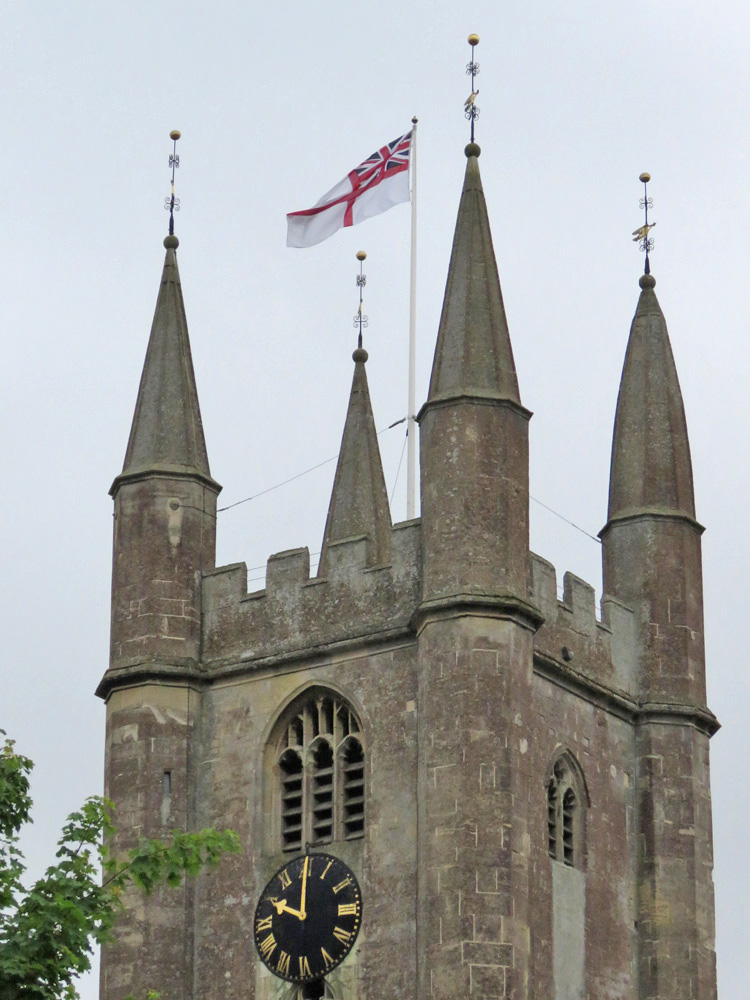
 A new Marlborough tradition has been born at St Peter’s Church: they mark thirty national days and anniversaries of relevant events each year by flying the appropriate flag, standard or arms. This tradition began some years after the Church was declared redundant in 1974. A Trust now runs the Church on a 99-year lease from the Diocese of Salisbury.
St Peter’s ‘flag days’ vary from the day Thomas Wolsey was ordained in this church (10 March 1498) to the ten days of the Battle of Britain and back to the day King John granted Marlborough its Charter (20 June 1204.) As people often ask why an unfamiliar flag is flying over St Peter’s, we are publishing the full list below.
They also fly flags to mark specific anniversaries. On Bank Holiday Monday (May 30) the White Ensign was flying to mark the day HMS Marlborough was adopted by the town – one of the regular days. This year the Ensign is staying aloft for two more days to mark the hundredth anniversary of the important First World War naval engagement, the Battle of Jutland – in which the battleship HMS Marlborough played a significant role.
Some of the these flags and standards are regular ones you can buy, but many of the flags flown over St Peter’s are so esoteric that they are specially made – by Marlborough resident, former ceremonial officer and embroiderer David Sherratt. He also made the new banners in the Church.
A specially designed 1914-1918 War remembrance flag – designed by David Sherratt – is being flown to mark the hundredth anniversary of days on which individual Parishoners were killed during that war.
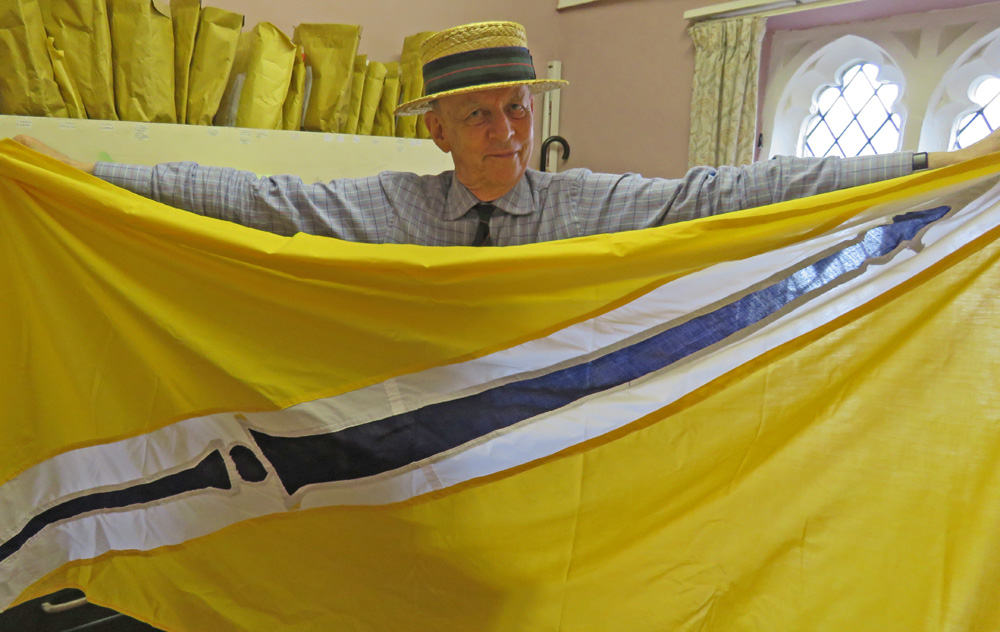 Another example of David Sherratt’s work is the Shakespeare Family Arms. This is flown on May 3 to mark Shakespeare’s birthday (1564).
This is often celebrated on April 23 – which is inconvenient for as it conflicts with St George’s Day – and that day certainly needs a flag. However, by using the Gregorian calendar, which was introduced during Shakespeare’s lifetime, his birthday slides neatly forward to May 3.
The man who looks after the flags and often raises and lowers them, is Major Jeremy York, St Peter’s Constable of the Tower. He also organises – and often conducts – the tours of the church tower. Some 1,500 a year make the climb raising about £2,000 towards the Church’s upkeep.
It is a fairly cramped climb up 137 steps to the top, but it is well worth it for the history you pass on the way up and the amazing views from the top.
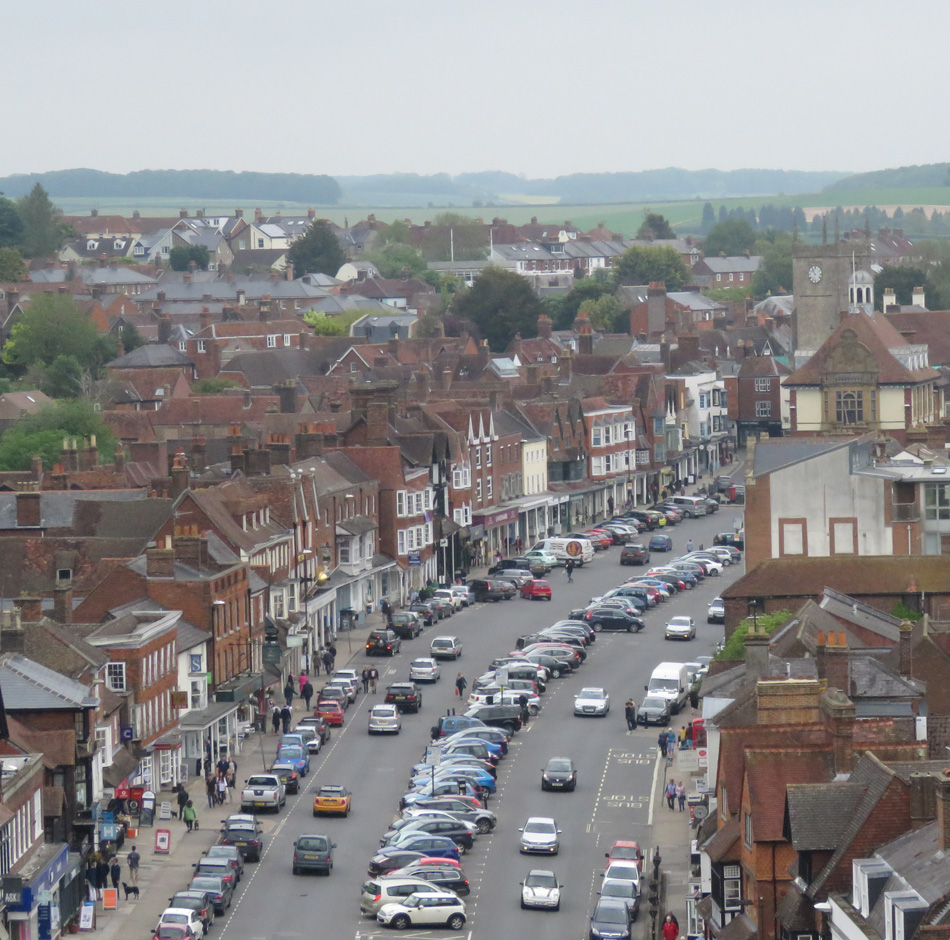
Even on a dull Bank Holiday Monday, once you are 100 feet above street level the views of the town and its surroundings are a revelation. You certainly get a unique view of the Marlborough Mound.
This Mound is hidden away in Marlborough College grounds and has only recently been proved to date from the same era as Neolithic Silbury Hill. Later it was used by the Normans to raise the castle’s keep above the homes of the hoi polloi. And later still, the stone from the castle was used to build St Peter’s Church.
![View from St Peter's Tower of the Marlborough Mound [Click on images to enlarge them]](https://marlborough.news/wp-content/uploads/2016/05/ST_PETERS_MOUND_VIEW_2_IMG_4759.jpg)
As you climb the tower you pass through The Priests’s Room (where the flags are stored), the ringing chamber (from which they used to ring the bells), the clock room (with its working clock), the belfry (now with just one bell) and so to the tower roof itself.
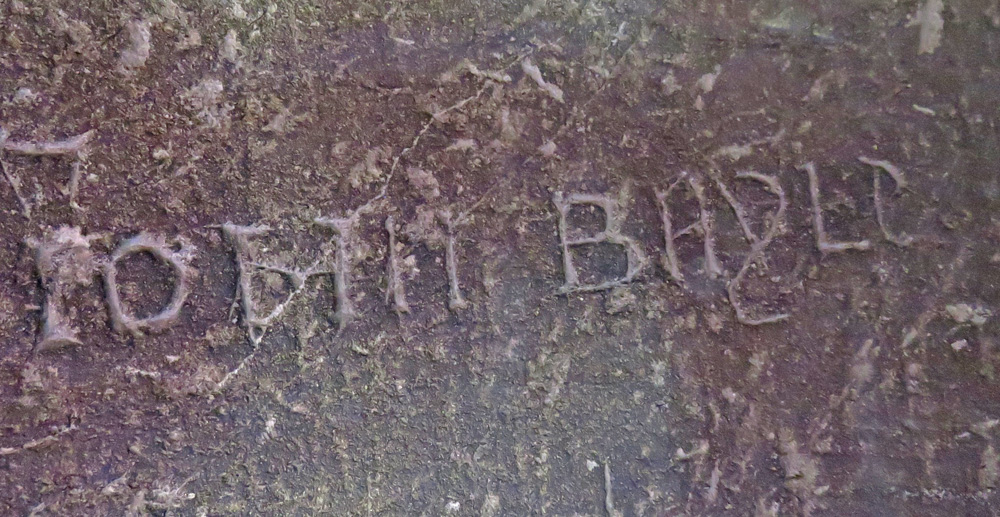
At one point you can see the signature of John Bayly – once of the Merchants House – inscribed into the wall. Other graffiti are more recent and not so interesting!
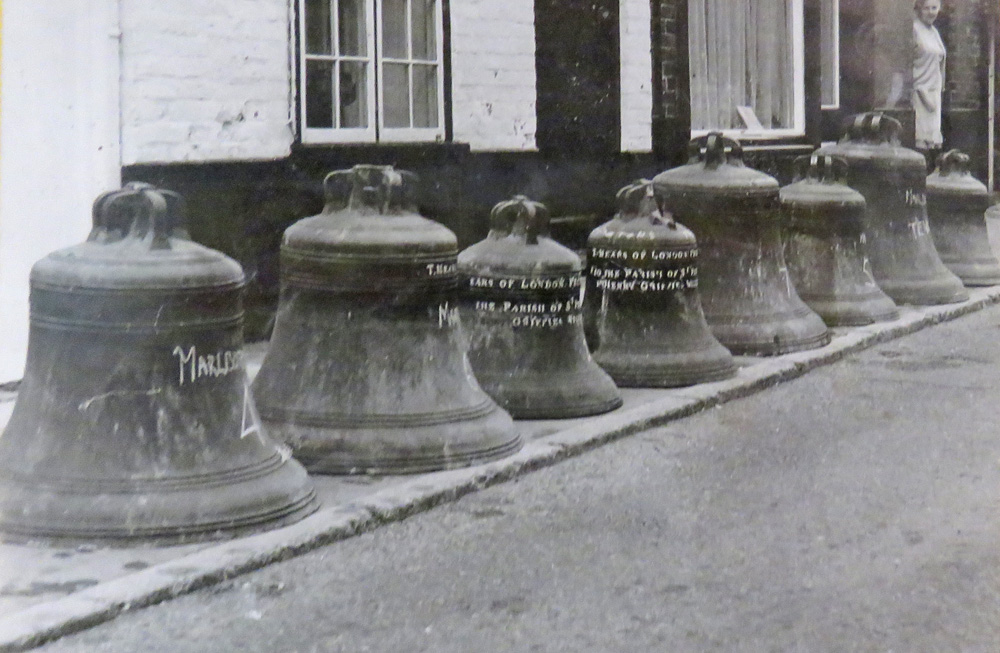
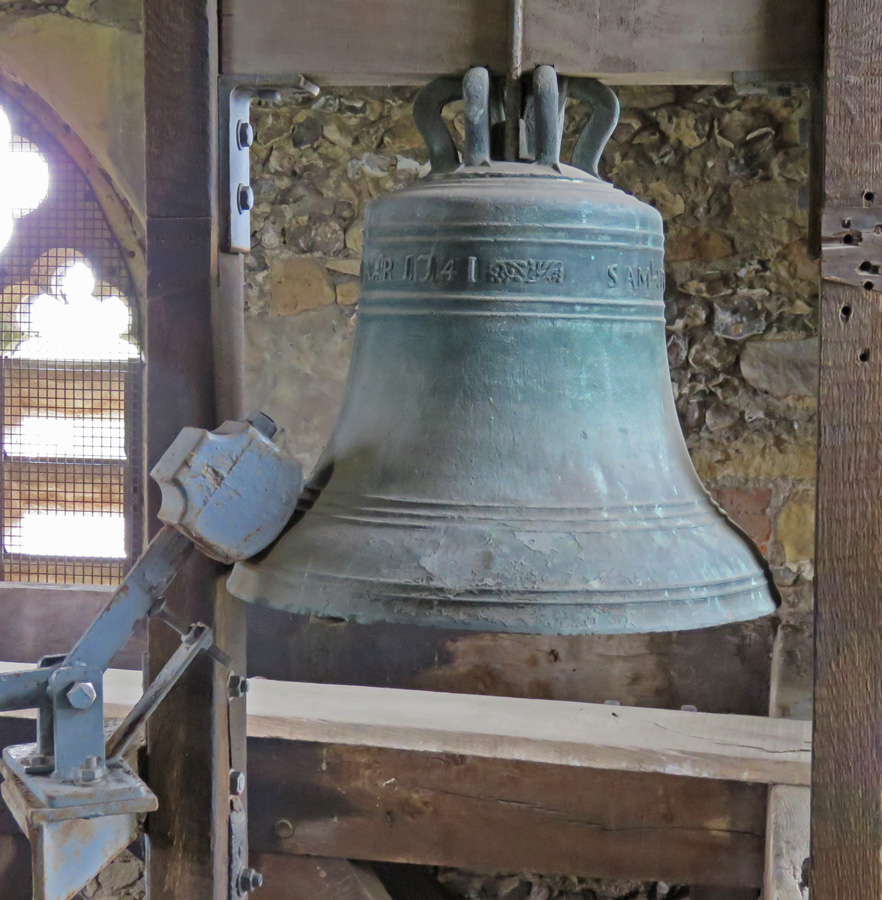
The church’s bells were removed in 1966 because their great weight was damaging the tower. Only the smaller Sanctus or curfew bell remains – it was cast in 1741. It now provides the chimes for the clock.
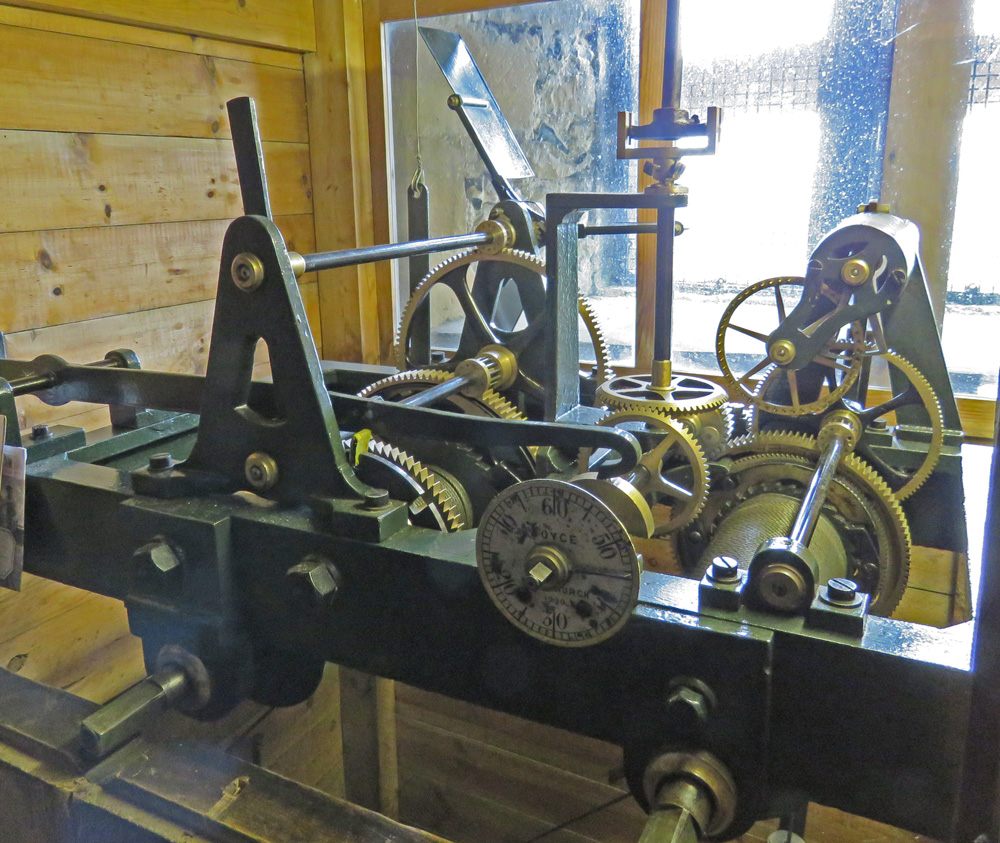
The clock was made by a Shropshire company in the very early years of the twentieth century. It is regularly serviced by an expert who says it will not need a major overhaul for another 150 years.
It is known that a church on the site was dedicated to St Peter in 1223. It was rebuilt in about 1460 – taking some of its stone from the castle. In the later sixteenth century the dedication was changed to ‘St Peter and St Paul’ – and although the Trust bears both saints’ names, it is now known once again as St Peter’s Church
Tours of the tower are available most Saturdays and Bank Holidays between Easter and early October, and are possible at other times by appointment via the St Peter’s website. St Peter’s The charge (at the time of writing) is £2 for adults and £1 for accompanies children. And once down again, there is a very good café in the Church serving good pick-you-up coffee – and very good cake.
St Peter’s Church schedule of regular flag raisings through the year:
26 January Australia Day Australian national flag
5 February Waitangi Day New Zealand national
flag
6 February Accession of HM The Queen Union flag
March (varies) Commonwealth Day Union flag
1 March St David’s Day Welsh national flag
10 March Ordination of Thomas Wolsey
(1498 at St Peter’s Church) Wolsey’s Arms
17 March St Patrick’s Day St Patrick saltire
21 April Birthday of HM The Queen (1926) Union flag
23 April St George’s Day Flag of St George
3 May Birthday of William
Shakespeare (1564) Shakespeare family arms
19 May Marlborough Charter Day –
Queen Elizabeth I (1576) Royal arms of Elizabeth I
25 May Wessex Day Flag of Wessex
30 May HMS Marlborough adopted by Union flag or
the Town White Ensign
2 June HM the Queen’s Coronation (1953) Union flag
June (varies)Official birthday of HM the Queen Union flag
15 June Sealing of Magna Carta Royal standard of King John
20 June Marlborough Charter Day – King Royal Standard of
John (1204) King John
June (varies) Armed Forces Day Union flag
29 June St Peter’s Day Flag of St Peter
1 July Dominion Day Canadian national flag
4 July USA Independence day Stars and stripes
3 September Merchant Navy Day Red Ensign
6-15 September Battle of Britain RAF Association Standard
21 October Trafalgar Day (1805) Union flag or White Ensign
25 October St Crispin’s Day (Battle of
Agincourt – 1415) Flag of St George
26 October Death of King Alfred the
Great (899) Flag of Wessex
November (varies)Remembrance Sunday Union flag
11 November Armistice Day (1918) Union flag
29 November Death of Cardinal Wolsey (1530) Wolsey’s Arms
30 November St Andrew’s Day St Andrew Saltire
(St Peter’s flag is also flown on days associated with the Trust that looks after the church.)
 Dr Nick in Calais: Day Six – Mustapha’s story


