





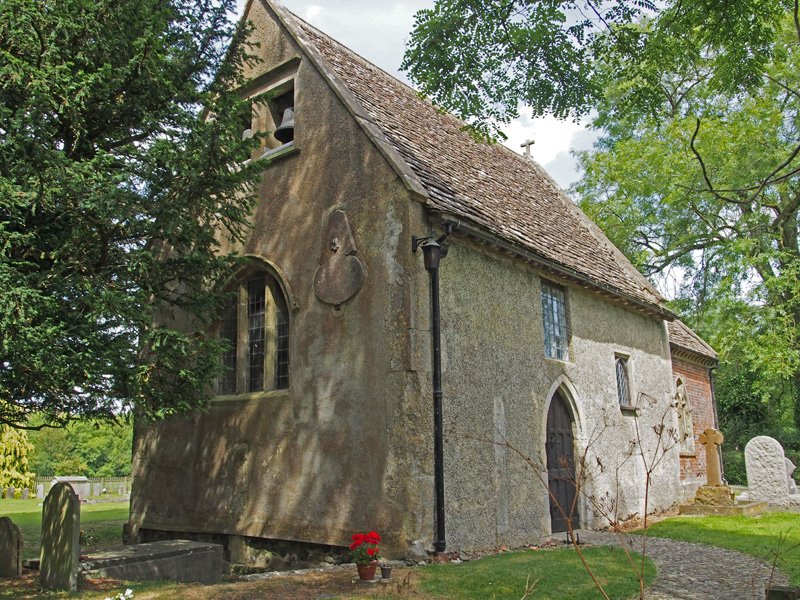
 The tiny, mainly Saxon church of St Mary’s in Alton Barnes has won ‘initial support’ from the Heritage Lottery Fund (HLF) for a far-reaching renovation scheme. This means that if its detailed plans are accepted the Alton Barnes Saxon Church project will get a grant of about £180,000.
This church is one of the smallest churches in England – even smaller than its sister church, All Saints, Alton Priors which lies about a quarter of a mile away in the middle of an ancient field.
The HLF have awarded the St Mary’s project an immediate £19,900 to draw up the final plan and costings – and so clinch the full grant. The project aims to safeguard the future not only of the church, but also of its setting.
 But even the HLF grants will not raise sufficient funds – a further grant will be sought from the Listed Places of Worship Scheme and fund raising efforts will need to continue.
Local resident Michael Balston, who chairs the appeal committee, is delighted and relieved that the HLF has given the project their support: “After 1,000 years the building sorely needs attention to keep it weathertight. We hope we can ensure that it will remain at the heart of the community for centuries to come.”
Mr Balston told Marlborough News Online: “There’s a long way to go. I’m not counting any chickens, I’m just being optimistic.” The committee have two years to submit fully developed proposals.
But some initial work, especially on the roof, is urgent. Once the Diocesen authorities and the HLF have given permission, work could be started soon to make the roof watertight – replacing crumbling stone tiles.
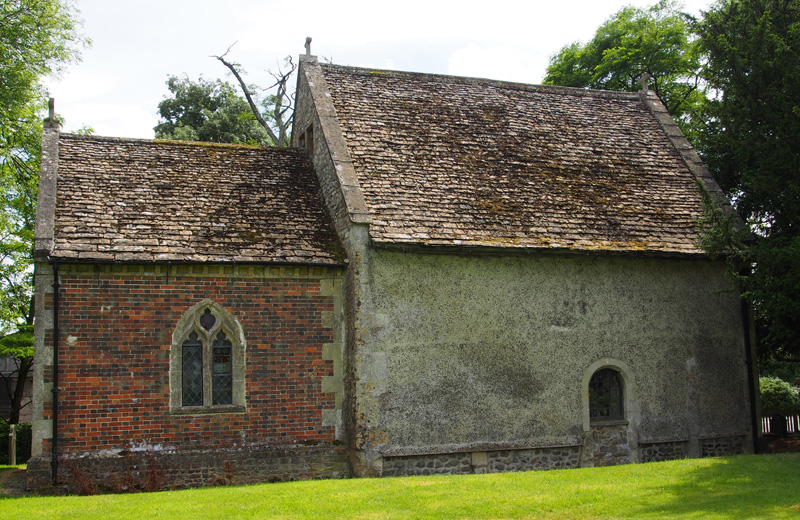 One of the exciting elements of the renovation will be discovering what is behind the early twentieth century pebbledash render that covers much of the walls. This render is now thought to be retaining a dangerous amount of moisture. Some experts believe full Saxon walls might be revealed when it is removed.
Mr Balston is cautious about this part of the scheme. He thinks there probably are Saxon walls behind the render, but “We just don’t know. The long vertical stones are Saxon, so the chances are the bit in between them is Saxon.”
But there are risks involved. The walls may be in such a bad condition the render will have to be left – or replaced: “Do we expose the history and run the risk of damage or try and counteract any damage.” And changing the familiar look of the church “would be controversial.”
The original structure was probably built in the tenth century. Church and surrounding farms were then ‘acquired’ (in dubious circumstances) by William of Wykeham, sometime Lord Chancellor and founder of Oxford’s New College.
The College still owns land in and around the Altons and the current Warden of New College, Sir Curtis Price, is one of the patrons of the St Mary’s renovation fund.
The other patron is the journalist and author Sir Simon Jenkins. In his book England’s Thousand Best Churches, Sir Simon describes St Mary’s as ‘an enchanting place’: “So small is the space that preaching in Alton Barnes must be more like a private conversation with the congregation.”
Since 2008 Sir Simon has been Chairman of the National Trust and was for five years deputy chairman of English Heritage – he is a powerful advocate for St Mary’s.
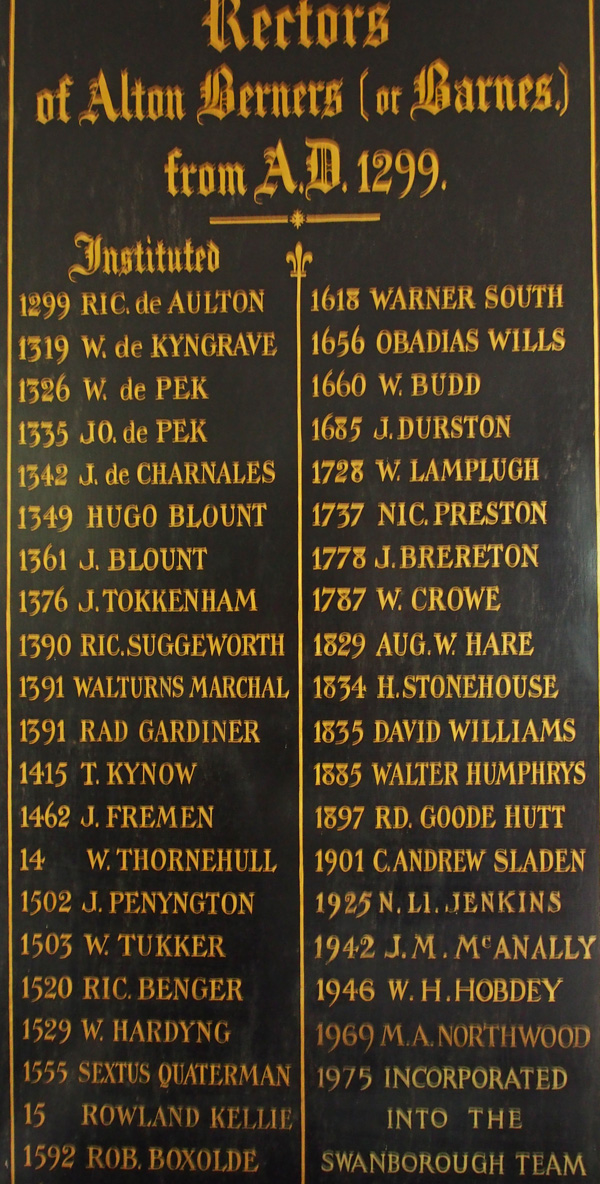 While the list of the parish’s rectors goes back to 1299, since 1975 the church has been sharing clergy and St Mary’s is now one 16 parish churches served by the Church of England’s Vale of Pewsey Team.
The history of the area around the church will feature strongly in the project and the local community has enthusiastically embraced the scheme.
The fund, says Nerys Watts, head of HLF in the south west of England, is pleased to support this ‘worthwhile project’: “St Mary’s Church and it’s setting provides a great insight into the long-standing and varied heritage of the local area. With HLF’s grant, the history and important architecture of the church will be conserved and opened up to a wider audience for future generations.”
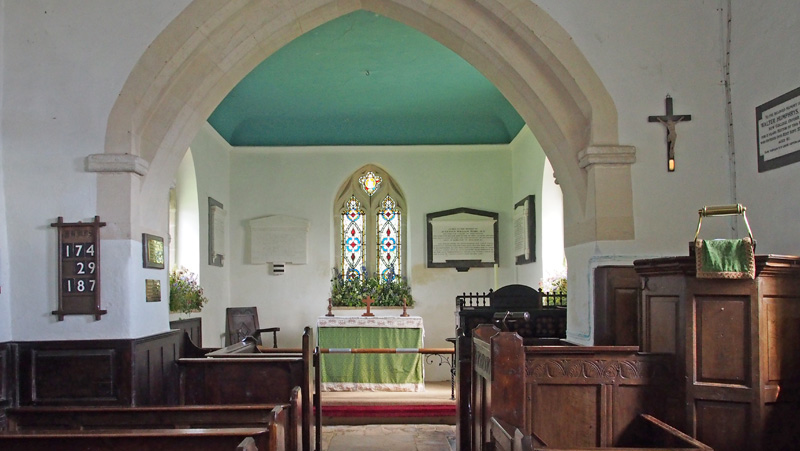
The church has many notable features including bells dating from 1626 and 1788. It has a memorial to the two villagers killed in the Second World War – one of whom is, most unusually, buried in the churchyard under a Commonwealth War Graves Commission headstone.
There is also a memorial tablet to the four villagers who did not survive the First World War.
Of great interest are the small yet exquisite memorial panes etched by Laurence Whistler and his son Simon. Both were renowned glass artists who lived in the village for some years.
On September 9 at 7pm there will be a fund raising recital at St Mary’s arranged by Music for Awhile featuring rising violin star Colin Scobie playing Bach and Ysaye. Tickets can be bought by phone 01672 851851 or by email to meriel@balston.co.uk
Book soon as the church is very small.
Click on photos to enlarge them – then < & >
 Mayor awards St Peter’s pupils certificates for their Marlbrough in Bloom ‘Poppy Art’ competition success


