







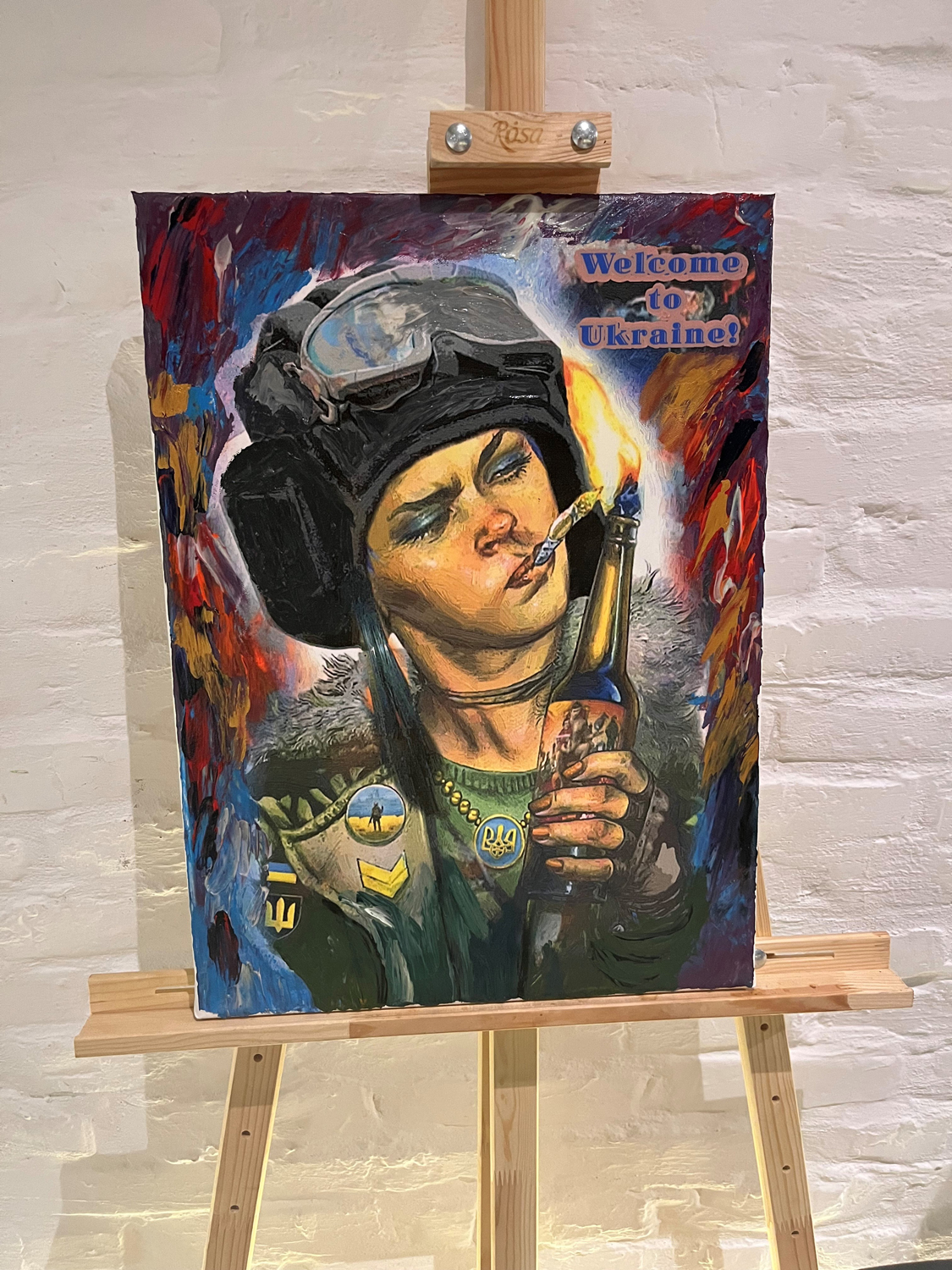
I took a different route yesterday morning when I left my hotel, walking 40 minutes south of the city centre to ‘Pasta Café’ for a new kind of volunteering.
Pasta Café is an organisation that prepares food for internally displaced people in Lviv, and packs dry meals to send off to front line soldiers in the eastern Ukraine. When I arrived, I was introduced to some of the volunteers; three were Americans, and one was Austrian. It was nice to socialise with other volunteers and to hear their stories. I was also offered a slice of watermelon, which came from Eastern Ukraine.
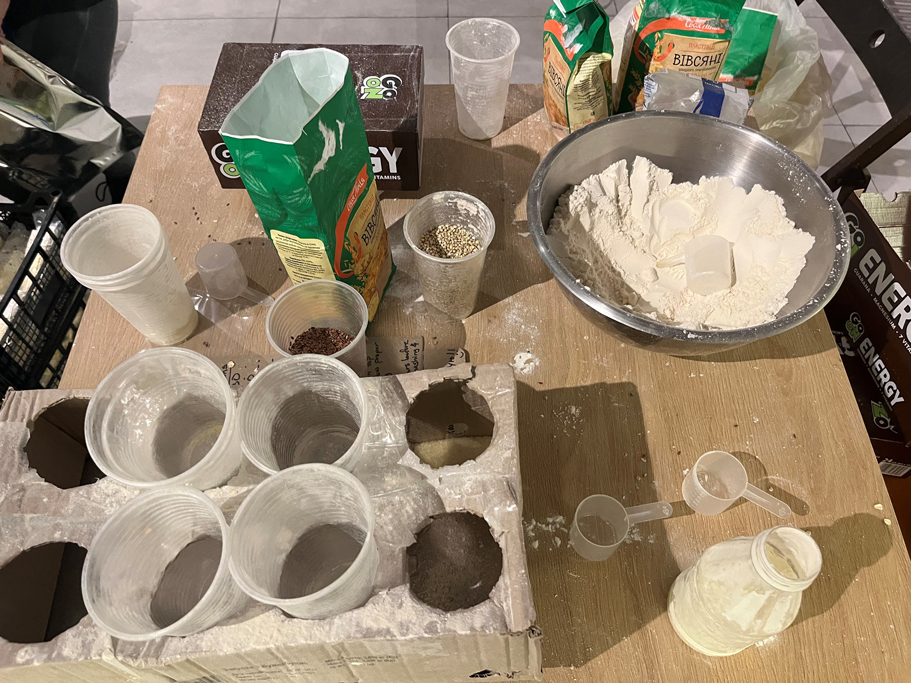
While chatting, we packed and sealed meals. This was a process of filling a plastic container with measured out portions of oats, flax seed, dried milk, and grains. Once we sealed these packages to make them airtight, we added small packs of vitamins (a fiddly task!), and chocolate bars.
I had only been doing this for half an hour when the downstairs kitchen requested help. I volunteered myself as tribute, thinking that this would be a relatively simple task. I didn’t consider the fact that all the chefs were Ukrainian and spoke no English, and I am English and can’t speak any Ukrainian other than ‘pryvit’ (‘hello’). It took me ten minutes to understand how I was not preparing the food properly and I realised I should probably brush up on my Ukrainian! Where I could tell that my ignorance was initially frustrating the woman trying to assist me, I ended up getting on with her well and got to try a load of the food. When one of the long-term volunteers saw me making pancakes she came over and said ‘I once had to do that for 3 hours’! This was welcome news to me, as I was getting a hefty supply of apple sauce filled pancakes – a Ukrainian specialty.
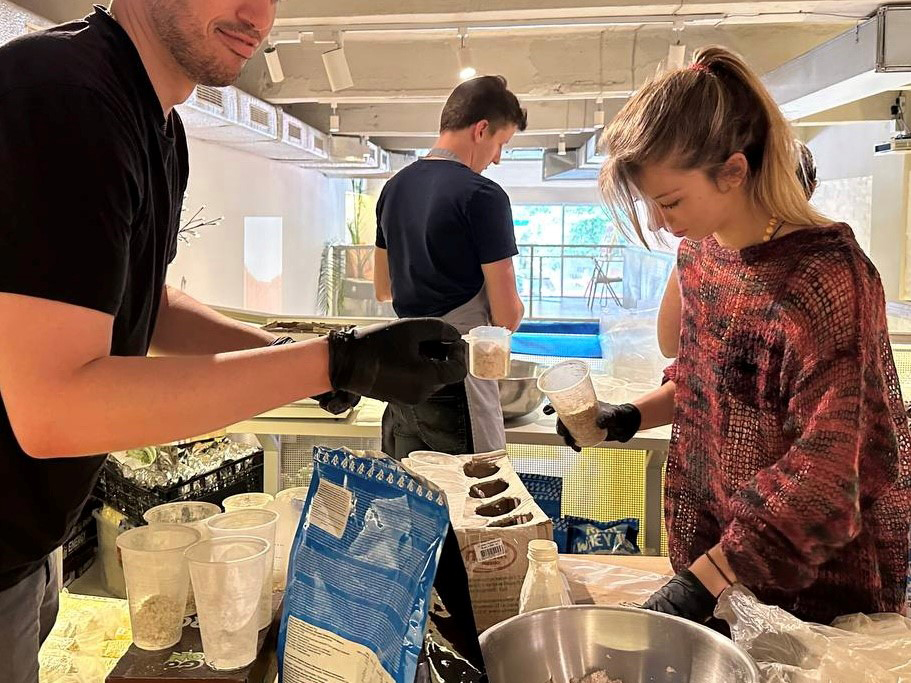
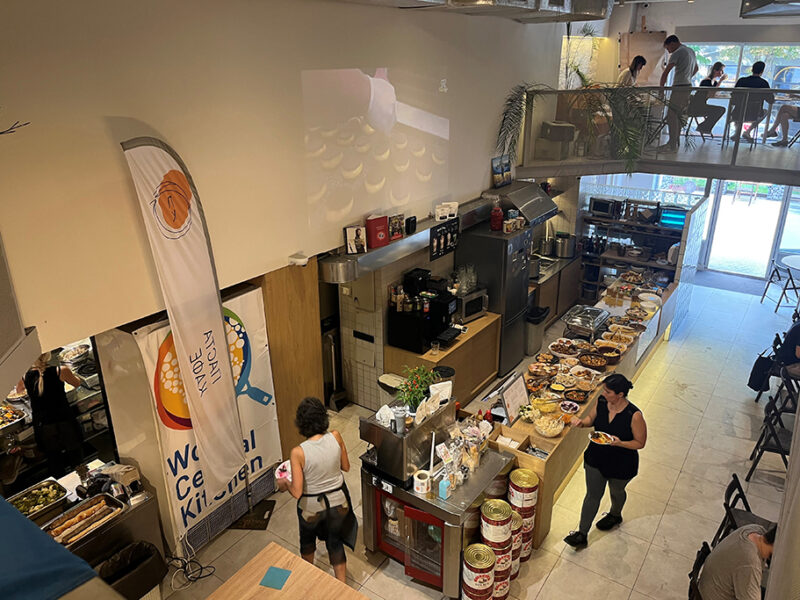
After this I returned upstairs to continue packaging the dry meals. I got talking to the Austrian volunteer, who told me that he was surprised when he got here at how much Austrian architecture there is. It was fascinating to hear the perspective of someone from a different country to the UK and learn more about the Ukrainian culture consequently.
The American volunteers, who arrived in Lviv at a similar time to me, asked if I had heard the air raid alarms yet. It turns out that alarms having been going on persistently in the evenings, but due to the music near where I’m staying, I can’t hear them! When I told them about my long evening walks, they said ‘but what about curfew?’. Thankfully I haven’t been out quite past midnight, as I now know that from 00:00 – 05:00 I’m supposed to stay indoors and head down to a shelter if sirens or church bells ring.

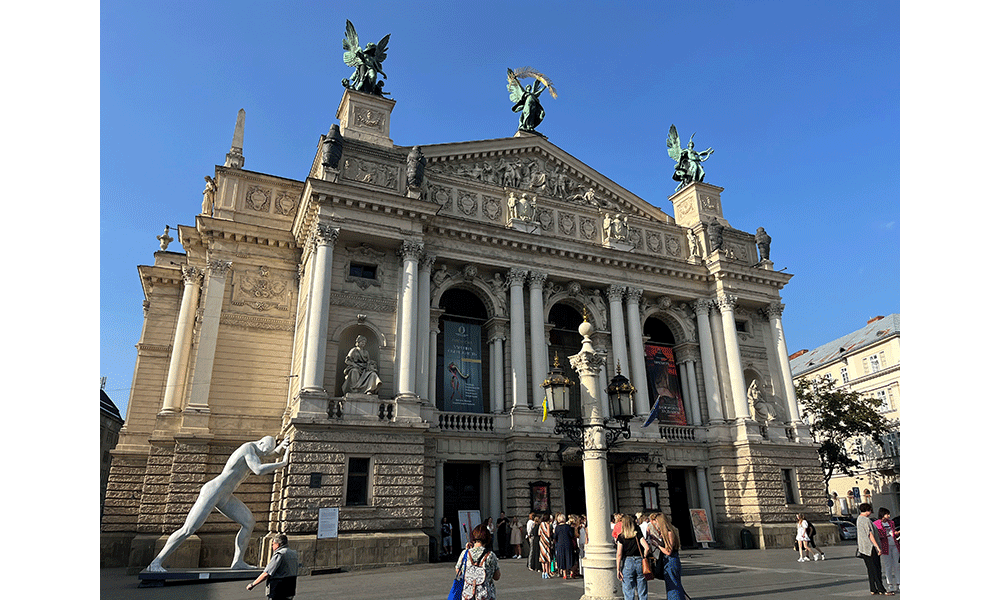
I told them that I was staying very close to the Lviv National Opera House, and they invited me to go with them in the evening to watch the ballet ‘Esmerelda’ that was on. I gladly agreed and bought a ticket on the way home. When I entered the ticket office, I noticed a sign on the wall. It discussed what to do in the event of sirens, saying that we would go down to shelter, and if the sirens went on for over an hour, the show would be cancelled. Being in such a vibrant and busy place, it’s easy to forget the severity of the war climate.
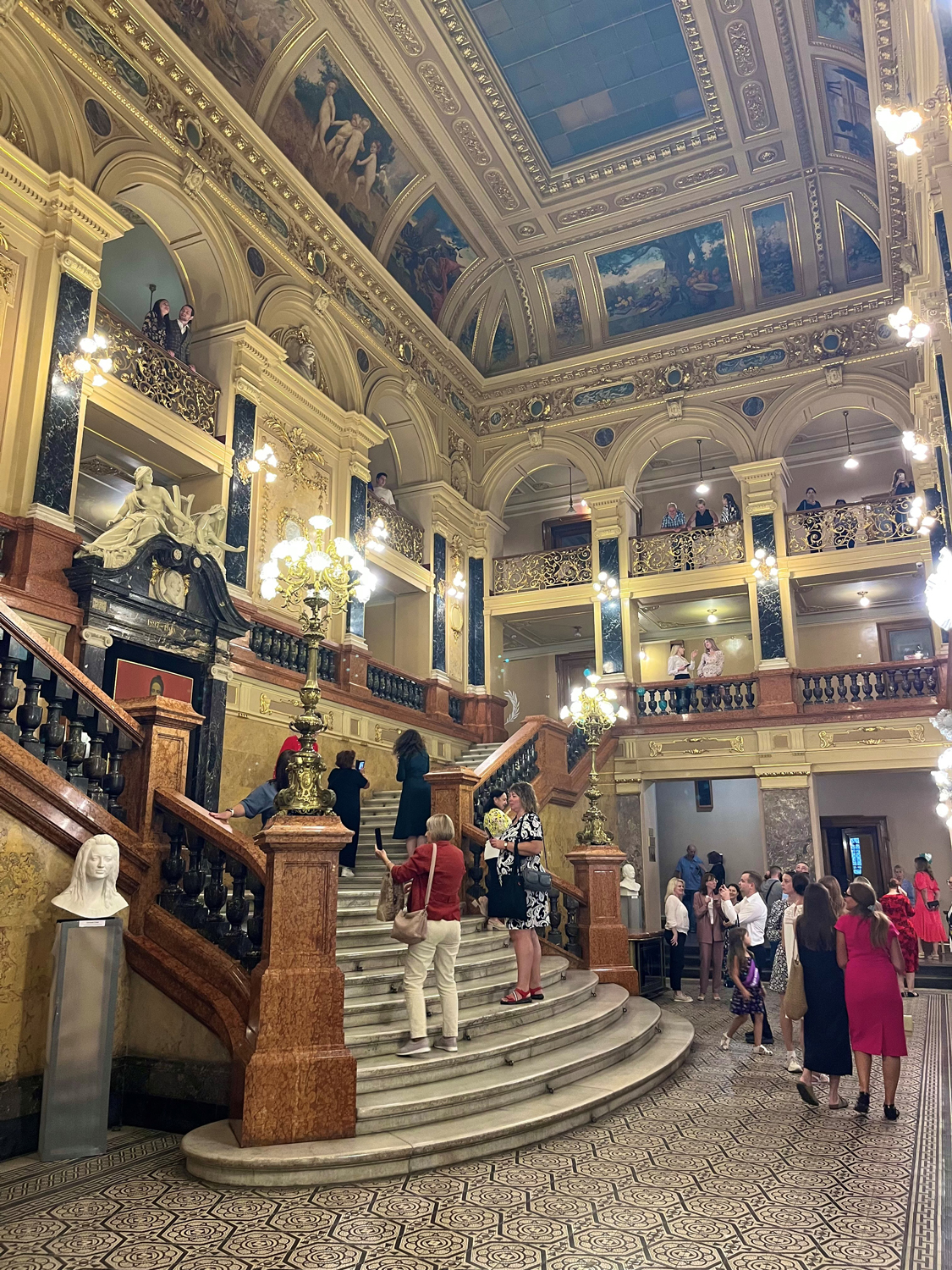
I met the others in the evening, and we took our seats. The opera house has a stunning interior, filled with neo-Renaissance and neo-baroque sculpture and art. The French ballet was a perfect fit for this setting.
When the lights went down, I assumed the curtains would open and the ballet would start. Instead, everyone suddenly stood up, to my confusion. The orchestra then broke into the Ukrainian national anthem, and as I looked around, I noticed that several audience members had their hands placed on their hearts. As the anthem finished, someone shouted ‘Slava Ukraini!’ (‘Glory to Ukraine!’), and the audience shouted back ‘Heroim Slava!’ (‘Glory to the heroes!’), then everyone took their seats again. It was deeply moving way to begin the ballet, and the thing I remember most strongly from the Opera House experience.
Afterwards the American volunteers and I, accompanied by a local Ukrainian we’d befriended during the ballet, went out for drinks. The local confirmed to me that the anthem and chant at the beginning of the performance was a ritual developed as a consequence of the war. I asked her how she felt about the war. She explained that where a year ago she was checking the news frantically every day, now for the sake of her mental health she has stopped looking at the news, choosing only to read about extreme events and developments.
As we were leaving, we noticed a large group of teenagers singing in the square again. The local informed us that they were singing along to a well-known Ukrainian folk song, and we joined the group to listen.
It was an emotionally-charged, enlightening day of trying new things and meeting new people. Each day I’m learning more about the culture and growing very fond of the city.
 Skydive raises funds for Wiltshire Air Ambulance


