






‘More than just inspirational. Beethoven can be lifesaving‘
This is a quote from John Suchet, in his latest book on the great(est?) of all composers – Ludwig van Beethoven and it was said to him on two occasions, by different people, in their own ways, but with essentially the same message. John Suchet delivered a rousing opening session to LitFest ’25, with such enthusiasm that he brought Beethoven to life, even without the help of a keyboard (or a musical one, anyway).
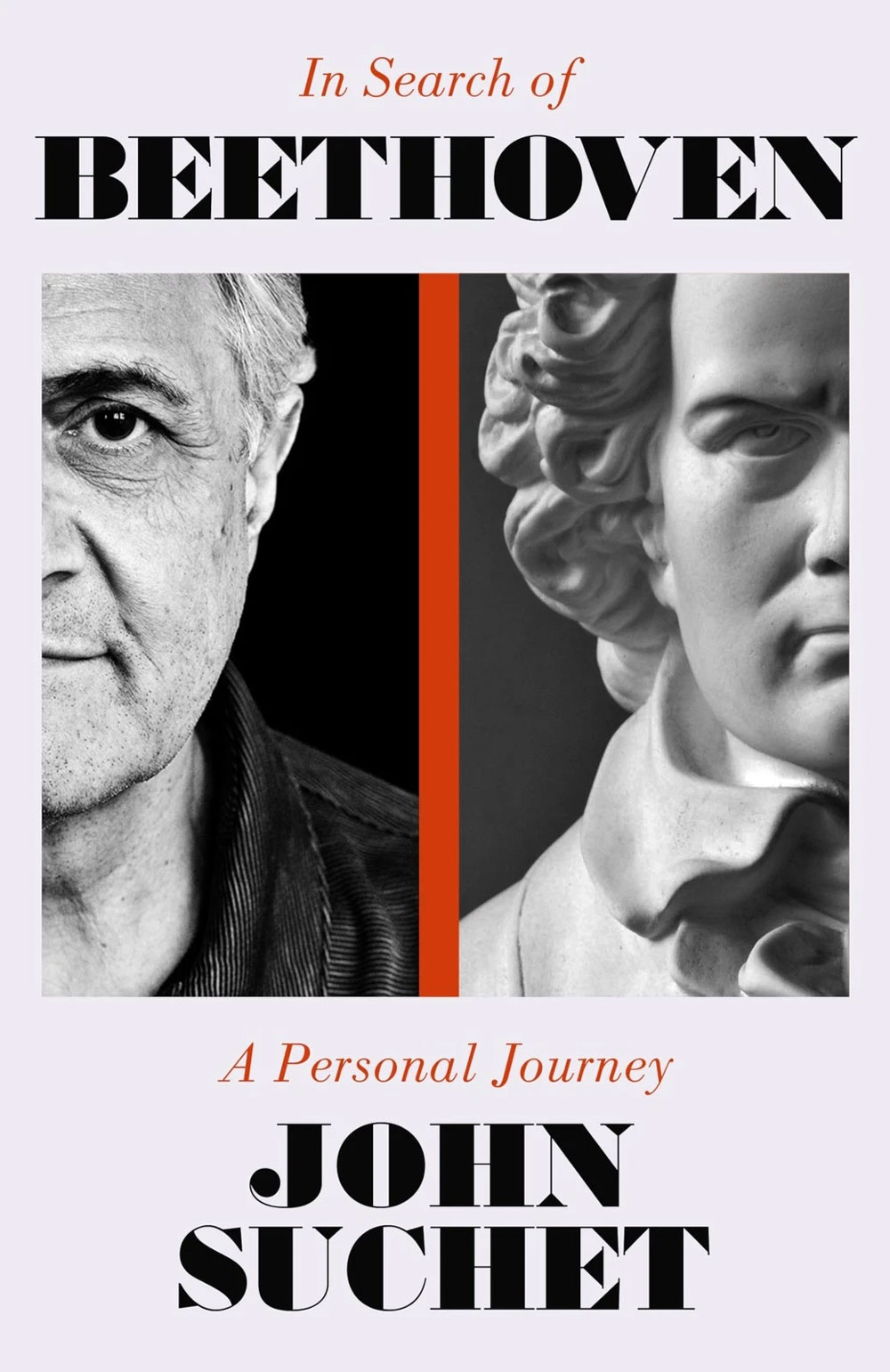
John inspired the packed Assembly Room in the Town Hall with a solo stand-up talk on Ludwig van Beethoven, his eighth book on this major composer so far, but this one holding more than just a subtle difference from the previous seven in so far that it wasn’t a biography, it was the journey of Beethoven’s life intertwined with John’s own life. It was how Beethoven’s journey through life affected and influenced his own in unexpected ways.
For John, Beethoven delivered something entirely different to any of the other great composers about which John has written or presented on one of his many and comprehensively varied radio programmes – Classic FM for years and of course BBC R3. Whilst Beethoven’s output – the number of works created – may be less than say Mozart, Haydn, or the Strauss brothers, it had intensity, strength and it’s own clear identity.
John talked in depth about the Eroica, Beethoven’s Symphony No. 3 in E-flat major, Op. 55 and how and where that was created – in 1802 during his stay in the Heiligenstadtand cottage.
It was there that he confronted his encroaching deafness and how he overcame it. The Eroica was his story of that journey, the opening two massive chords and then a sequence down to a very different C# to make an unexpected and powerful statement at the start of the work.
John described how Beethoven has for him helped at times when he was in greatest need. When, as an international TV News Reporter, on an almost empty overnight ferry from Limassol in Cyprus to the then civil war hotspot of Lebanon – no planes were flying in. On deck, looking towards the red glow of the battle scene that was the capital Beirut he pulled out his ‘battered walkman’ and the only tape cassette he had. Slotteded the tape in and became immersed in the Eroica symphony. Listening to it over and over again, getting it into his head and making him believe that he could do what he was being sent to do. War reporting, on the front line, is something way beyond every day life and takes a focus that we, even with our normal daily stresses could never comprehend. For John, Beethoven and the Eroica delivered him to that right place. Beethoven then – as it is now – was the soundtrack of his life. And whilst in the war zone of urban Beirut he came across a cassette tape shop, trading as only a cassette tape shop then could ever do, anywhere. Quite normally. And in that shop, looking through the shelves of cassettes he discovered a tape of the Triple Concerto which was quickly purchased, taken back to his hotel room and then slotted in to the walkman. He describes how he then sat there ‘and didn’t breathe’ for the next half hour or so, such was the intensity of this powerful work by Beethoven.

He also describes from the book how he discovered the font where Beethoven was baptised. Not in the church in which it originally stood, but…. A story in itself, and one that can only be taken from the book, but a story of coincidence and unexpected advice and direction. For him, something that could only be described as way beyond ‘special’.
And then there is Beethoven, his genome and his ‘family’. Or what or who, and from where did his roots emerge. One recent discovery is that (likely) his paternal grandmother maybe had had an affair and his assumed grandfather actually wasn’t. That maybe Ludwig’s origin from previous generations wasn’t Flemish, rather maybe from Turkish or North African lands, through the Moors of North Eastern Spain, possibly. That could explain the darker nature of his skin, and, as John noted, could be an influence for the rhythm of some of his works. A lock of hair may, in future, answer some of those secrets. And maybe lay the ground for book nine?
John described the relationship that he had established with the lineage of some of Beethoven’s relativess and those closest to him, particularly those from Julie “Giulietta” Guicciardi to whom he proposed (but was rejected) and to whom he dedicated his Moonlight Sonata.
There’s too much to note here. John’s book – ‘In Search of Beethoven: A Personal Journey’ will give more, far more. And written in his enthusiastic, knowledgeable and extremely readable style it will captivate and bring the life and meaning of Beethoven to our lives.
‘In Search of Beethoven: A Personal Journey’ , by John Suchet, published by Elliott & Thompson.
 The Parade Cinema – four years since the doors formally opened


