





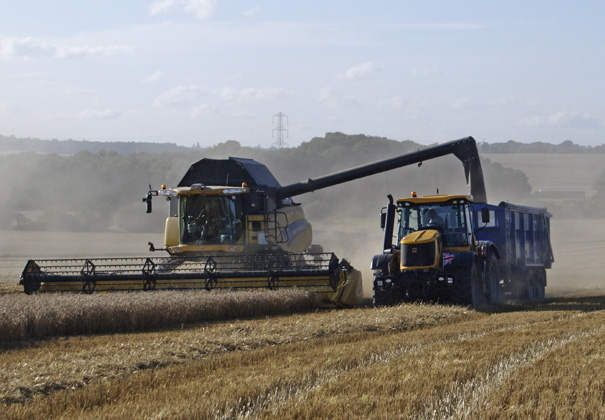
 From Monday next (March 9) farmers will be allowed to use larger, heavier tractors to pull trailers – and they will also be able to travel faster on roads.
The regulation changes put before Parliament by Claire Perry MP, Parliamentary Under-Secretary at the Department for Transport, are part of a possible two-stage relaxation of rules for tractors pulling agricultural trailers on roads.
The combined allowable weight of tractor-and-trailers can rise from 24.39 tonnes to 31 tonnes – but the existing trailer limit of 18.29 tonnes stays. Which means, of course, that larger and more powerful tractors can be used.
Interestingly, the announcement puts the new speed limit at “40km/h (approximately 25mph)”. Whether speed guns and radar traps can cope with “approximately 25 mph” remains for the courts to decide.
The farming industry has been lobbying for changes for many years. In May 2011 an article in the Farmers Guardian stated baldly that “…most farm tractors operating on UK roads are breaking the law.” And in 2009 a Health and Safety Executive survey had found that 90 per cent of the trailers and equipment it tested failed to meet even 1986 statutory requirements.
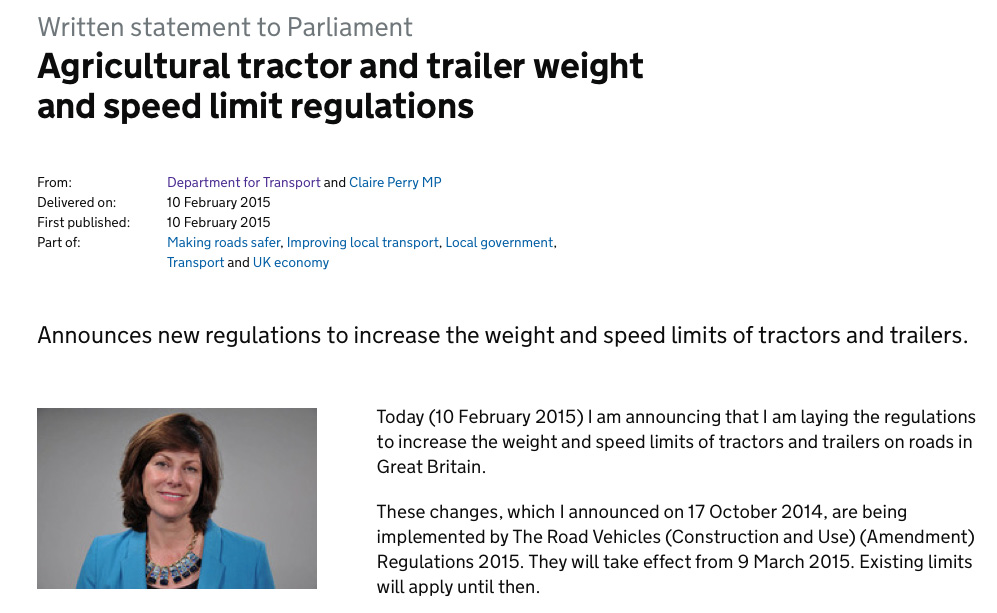 The main aim of the coalition government’s Farming Regulation Task Force was to reduce unnecessary ‘red tape’. And increasing combined tractor and trailer weights and permitted speeds was one of the Task Force’s main targets.
Mrs Perry’s statement continues: “These increases, which I expect to create over £57m a year in deregulatory savings for the farming industry will, when in force, update our regulations to better reflect modern machinery and bring British farmers more in line with their international counterparts.”
The financial savings appear to be based on farmers being able to make fewer journeys from combine harvester to grain store.
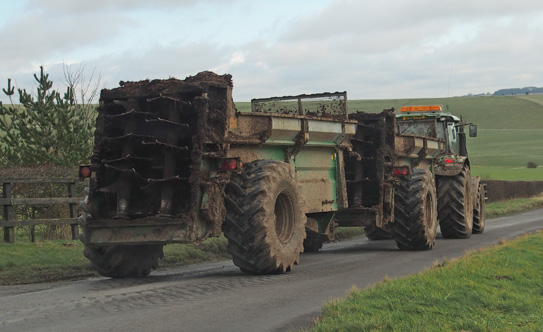 The government is also considering further increases to speed and weight limits, including increasing the trailer weight limit, “…to bring further benefits to the industry alongside a roadworthiness test for harvest 2016.” Some commentators have called this the introduction of an MOT-type test for farm vehicles.
It is unclear whether the Treasury will seize on this £57m saving to make a commensurate reduction in subsidy payments.
Greater speed may well lead to fewer tailbacks forming behind harvest loads on main roads. But with heavier tractors and heavier trailers travelling faster on narrow country lanes and by-roads, this change will not be welcomed by everyone.
Of course, relaxation of regulations always has risks attached – and these will have been highlighted by the dreadful accidents in Glasgow and Bath, albeit they had no agricultural connection.
 Marlborough’s February weather did not ‘fill the dyke’ but it was pretty chilly


