





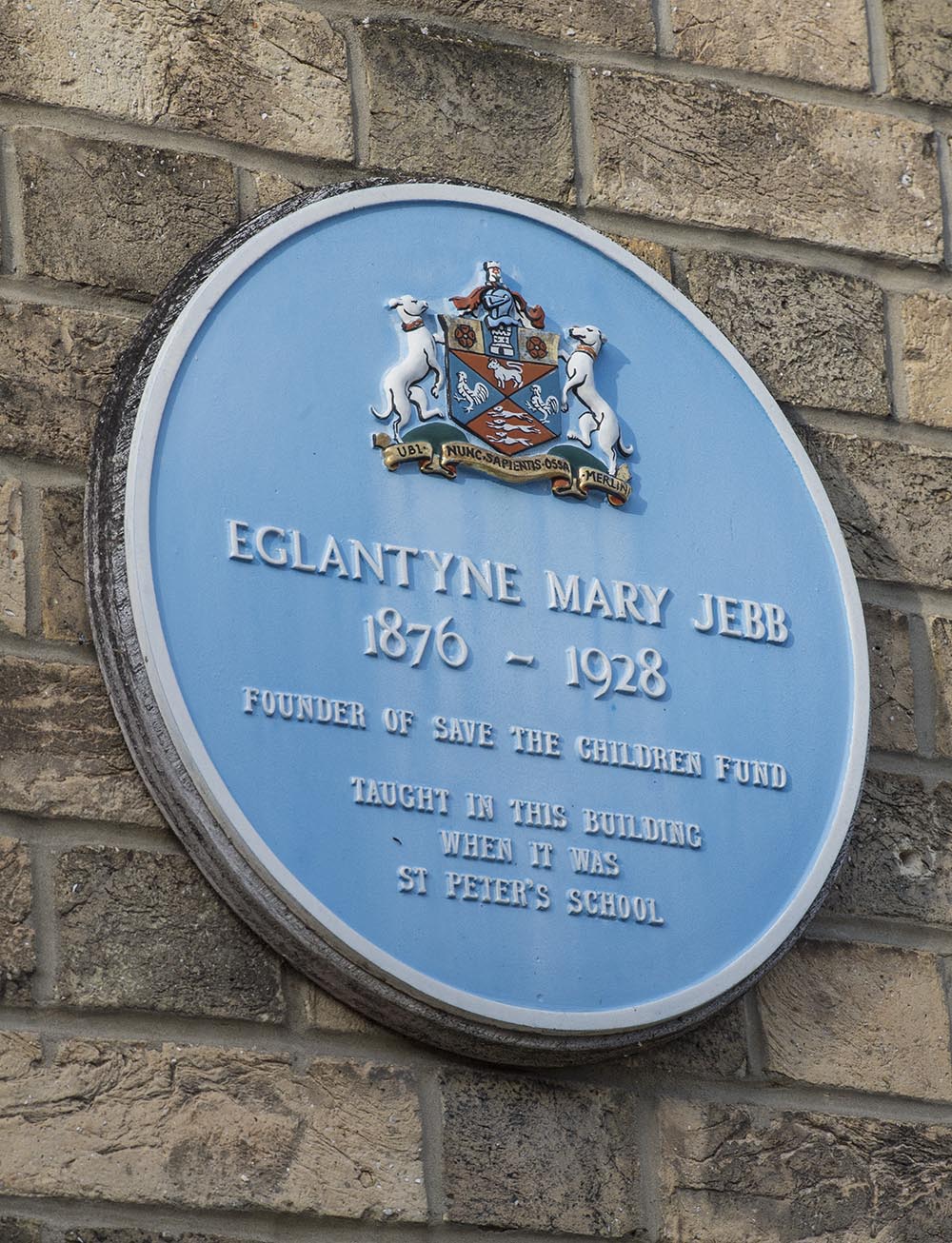
 Save the Children Fund celebrates its one hundred year anniversary on May 19 2019 and research by marlborough.news has uncovered evidence that the charity’s remarkable co-founder Eglantyne Jebb, who taught at St Peter’s School, Marlborough from 1899 to 1900 is not the Eglantyne Mary Jebb celebrated in the blue plaque on the wall of the town’s Library.
The current blue plaque announces ‘Eglantyne Mary Jebb 1876 -1928, Founder of Save the Children Fund taught in this building when it was St Peter’s School.’ The plaque was unveiled by HRH Princess Anne at a ceremony held in November 1996.
Sadly, marlborough.news has discovered that Eglantyne Mary Jebb and Eglantyne Jebb are two different people. Related, quite possibly, but certainly not the same person. Eglantyne Mary Jebb (1889-1978) was in fact from the Anglo-Irish branch of the Jebb family. A teacher, as was her near-namesake, she went on to become the third principal of Froebel College, London 1932- 1955.
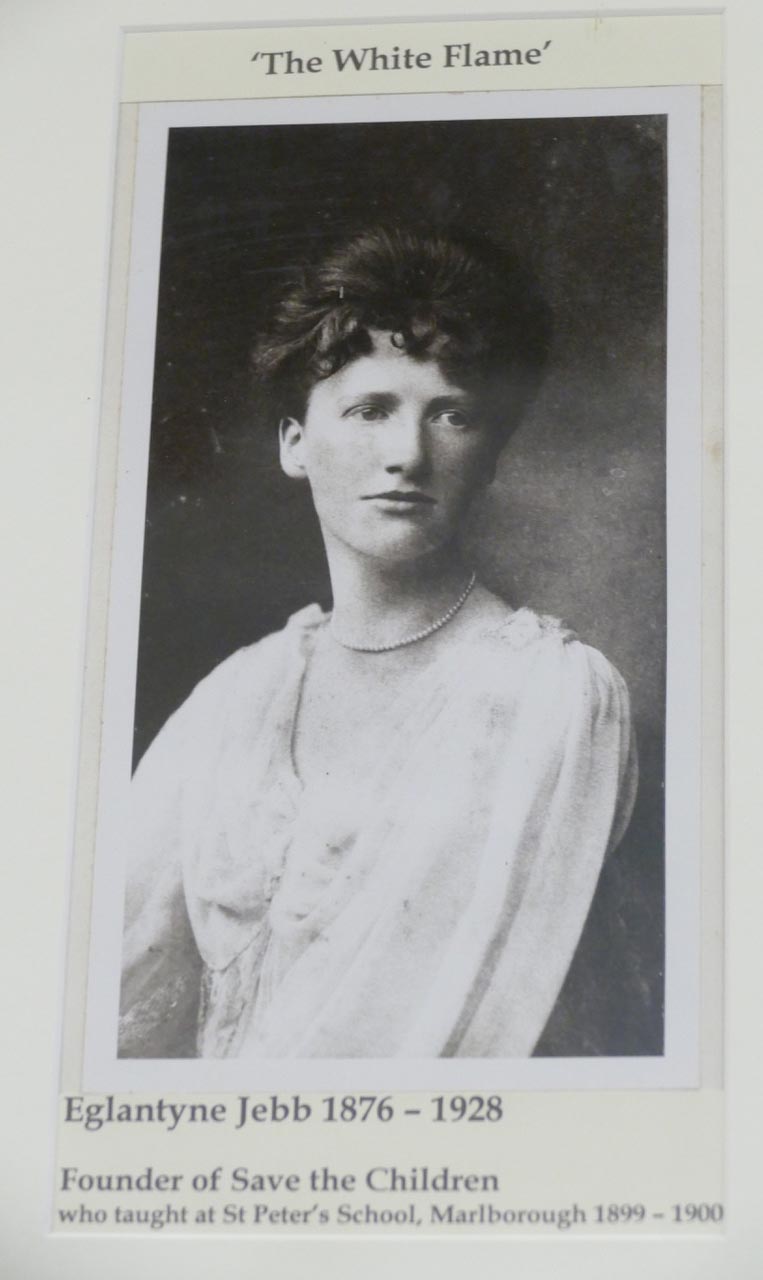 Eglantyne Jebb, the co-founder of Save the Children Fund, had no middle name. Her birth certificate, entries in the census of 1881, 1891, 1901 together with a photograph of her gravestone in a cemetery in Geneva document that she had no middle name.
It is to be hoped that Marlborough Town Council can correct this error so that Eglantyne Jebb’s remarkable legacy can be honoured in time for the charity’s centenary anniversary in May.
Eglantyne Jebb studied at Lady Margaret Hall, Oxford and Stockwell Teacher Training College. Aged twenty four she arrived in Marlborough as a teacher at St Peter’s School. At first she described her pupils as ‘fresh and pretty…steady and simple-minded.’
However, Clare Mulley in her 2009 biography, ‘The Woman who saved the Children’ writes: “as winter set in, things were worse than Eglantyne had imagined possible. Conditions were miserable. There were not enough books, chalks, needles or fuel.”
Eglantyne frequently visited her pupils in their homes where she was “outraged by their appalling living conditions.”
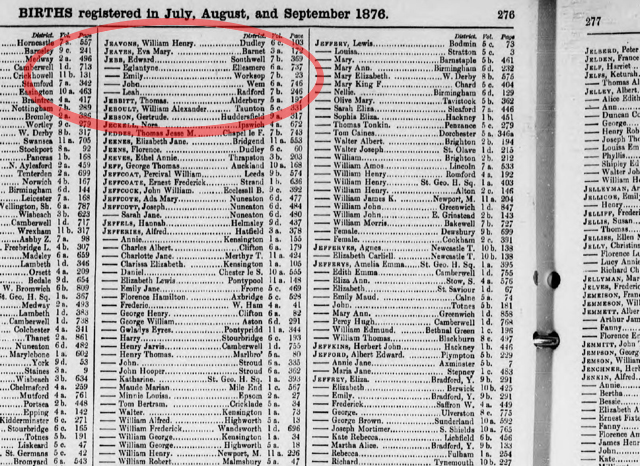 Her own accounts of her pupils reveal how much the extreme poverty of her pupils’ lives affected her: ‘Bessie Gray (aged 12) used to mother five children younger than herself, as her mother died in childbirth. Cold and underfed she was yet one of the sharpest children in the school, masterly in composition and sums.”
Eglantyne left St Peter’s School in 1900 due to ill health but there can be no doubt that the experiences of child poverty she encountered there made a deep impression on her. In the aftermath of World War One it was the plight of starving children in Europe, victims of the blockade, that led her and her sister to take action.
On May 19, 1919 Save the Children Fund was set up at a packed public meeting in the Royal Albert Hall, London. Publicity campaigns used shocking images of children suffering from the famine in Europe and considerable funds were raised to tackle the crisis.
The International Save the Children Alliance is now the world’s largest independent organisation for children. It works to improve the life chances of children in one hundred and twenty countries.
Eglantyne was also responsible for the creation of the ‘Declaration of the Rights of the Child’ which was adopted by The League of Nations in 1924 and inspired today’s UN Convention on the Rights of the Child.
“I believe we should claim certain rights for the children and labour for their universal recognition, so that everybody – not merely the small number of people who are in a position to contribute to relief funds, but everybody who in any way comes into contact with children, that is to say the vast majority of mankind – may be in a position to help forward the movement.”
Marlborough should be proud to be part of Eglantyne’s life story. As well as correcting the blue plaque, three other events are planned to mark the centenary anniversary.
Clare Mulley, author of the Eglantyne Jebb biography ‘The Woman who Saved the Children’, will be speaking at Marlborough History Society on Thursday May 16. There will be a project for children as part of the LitFest and a service of thanksgiving and celebration for the life of Eglantyne Jebb will be held in St Mary’s Church in December.
Jennifer Brisker, our local representative of Save the Children, who has worked for the charity for over 30 years in a variety of roles and received a BEM in recognition of this in 2015 notes: “Marlborough and Pewsey branch of Save the Children raises around £6000 per year. 25% of money raised for Save the Children is spent on children right here in the UK. There is a lot of work done with schools in deprived areas.”
“As long as there are children and families needing support I can’t give up…If everyone just did something to help the world would be a better place.”
In Eglantyne Jebb’s own words: “Save the Children is often told that its aims are impossible – that there has always been child suffering and there always will be. We know. It’s impossible only if we make it so. It’s impossible only if we refuse to attempt it.”


