







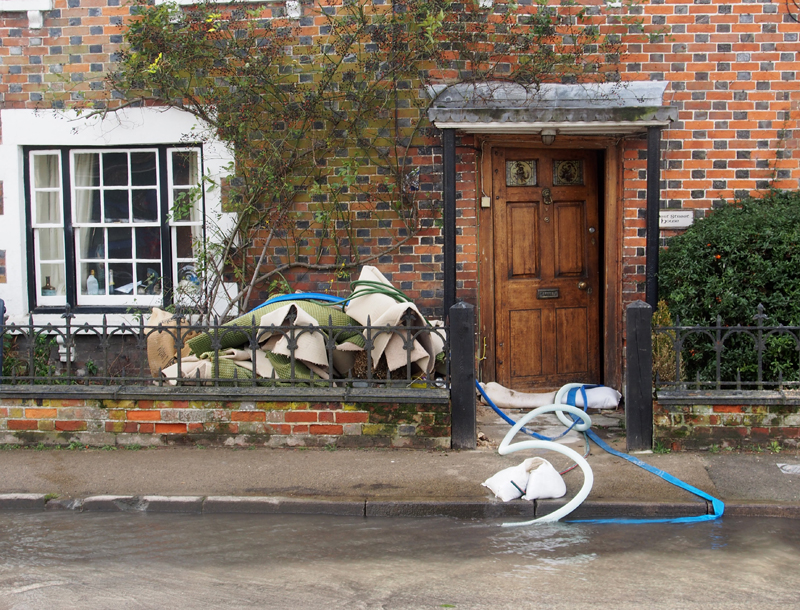
 On Wednesday (February 12) they had a surge of groundwater through Aldbourne – as if they needed reminding that there has been a Flood Alert in place in the village for over a month.
One house in West Street has water bubbling up through the floors of its two front rooms. Neighbours and friends have installed small submersible pumps to keep the water level as low as possible. But it keeps on coming.
Ruined carpets, chairs and a sofa stacked outside evidence of what this sort of flooding coming up under floors and through walls can do to a home.
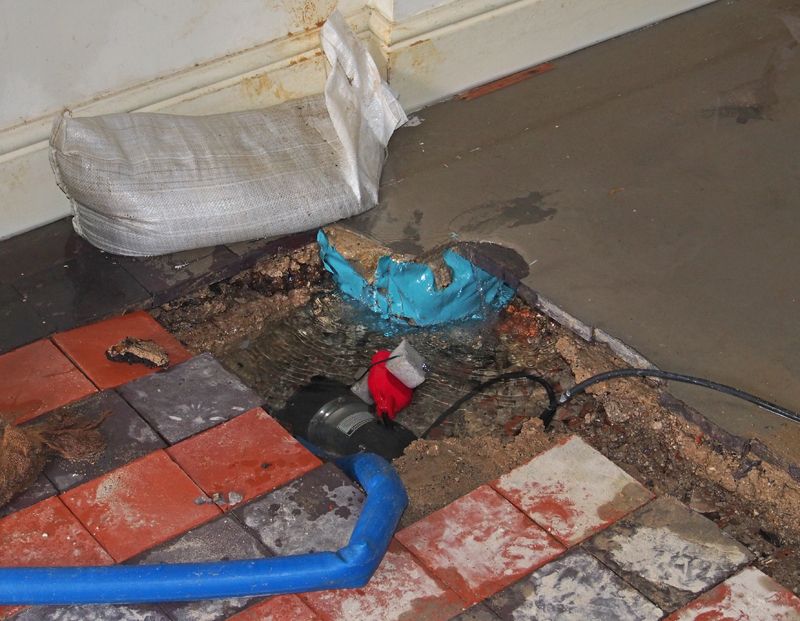 The owner has lived in the house – built in 1760 – for many years and says it has never been flooded before. Her great fear is that with the coming heavy rains on Friday they will lose their electric power and the pumps will stop: “Then we’re all lost.”
The Environment Agency puts the situation clearly in its Flood Alert notice of February 11: “Groundwater levels in the Upper Aldbourne Valley are high and are continuing to rise. Levels will remain high and are sensitive to further rain forecast over the next couple of days and into the weekend.” But it rather optimistically or unwisely states that “Property flooding is possible.”
“Due to the nature of groundwater behaviour, this situation could continue for several weeks or longer and impacts are expected to be similar to the flooding during the winter of 2000-2001.”
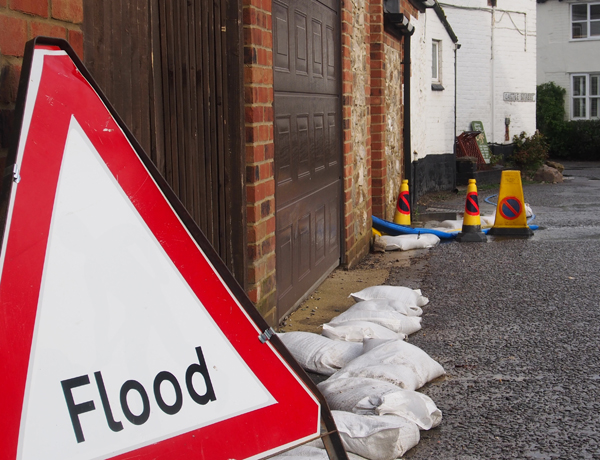 And they do not plan to update their warning until next Wednesday (February 19.)
House after house in the village centre has sandbags barricading its front doors and hose pipes of varying sizes pumping water out of ground floor rooms and foundations.
All around the village water is bubbling out of manhole covers and drain covers. Further from the village centre some of the groundwater is rushing into drains (only to emerge further down into the village) while the rest of the groundwater floods down West Street.
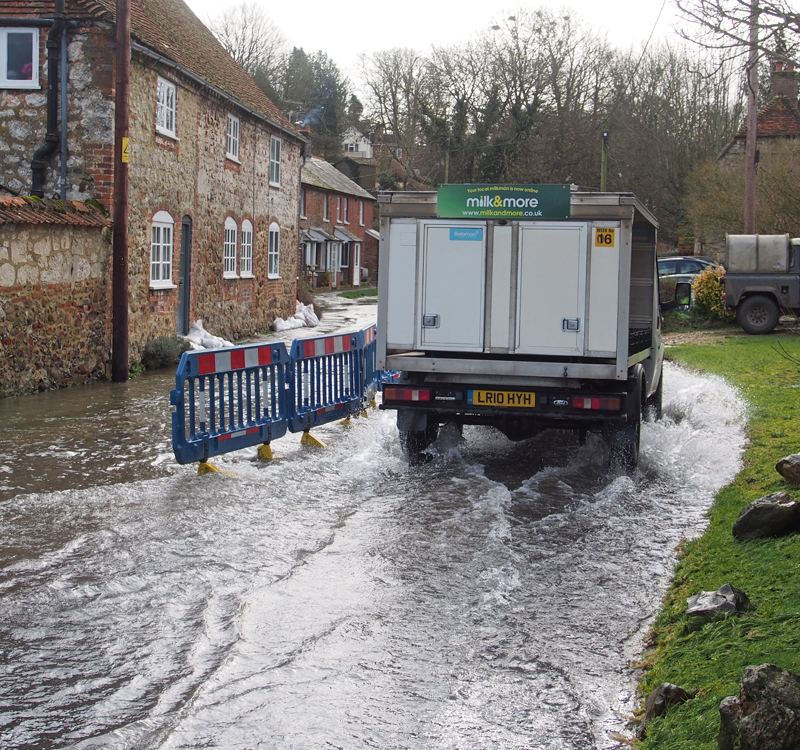 In the north-east of the village the level of the winterbourne (that’s a stream that flows in the winter and dries up in the summer) is so high it has turned Lottage Road into a fast-flowing river.
Lottage Road was closed to traffic on Wednesday because the water was flowing so fast and was getting very deep. It was still closed on Thursday – except for access traffic and the aptly named milk float.
Aldbourne has suffered many years of flooding – and especially of overflowing sewage. Last winter Thames Water had tankers emptying out the sewers in the middle of the village for weeks and weeks.
When we visited Aldbourne on Thursday there were unmistakable signs that sewage and its attendant health hazard was becoming another problem to add to the continuing flow of groundwater.
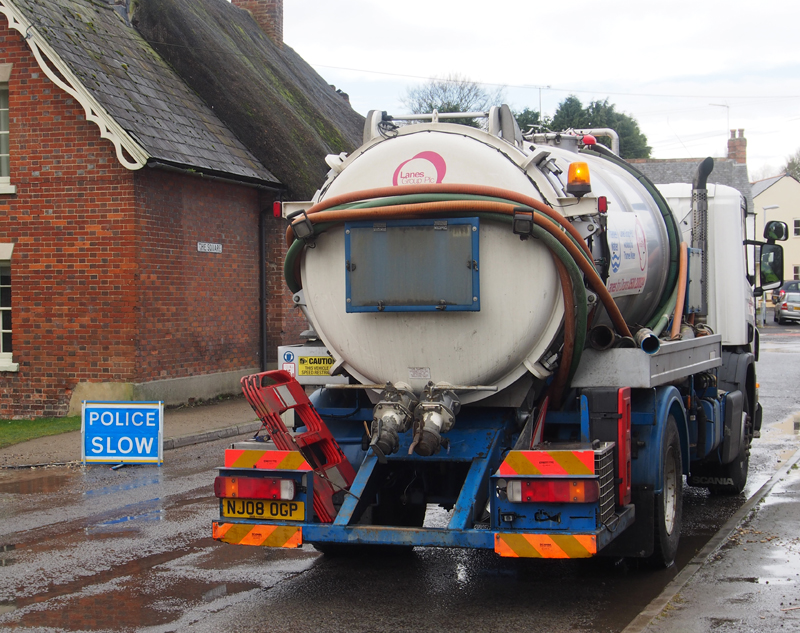 A tanker from contractors working for Thames Water was on standby.
The village nestles in a fairly deep valley between the downs so it is at the mercy of a large catchment area. Some way south of the village the winterbourne becomes the River Aldbourne, flowing all year round and joining the River Kennet four miles south of Aldbourne village, near Ramsbury.
One man who had lived in the village for very many years told Marlborough News Online that the village had got used to flooding, but that this was more widespread than in other years.
He did have a story to cap these floods: he remembered the winter of 1941 when weeks of hard frosts left huge icicles hanging off the trees, eaves and telephone lines.
When there was a sudden thaw, the melting ice could not soak into the frozen ground and the whole centre of the village became a lake.
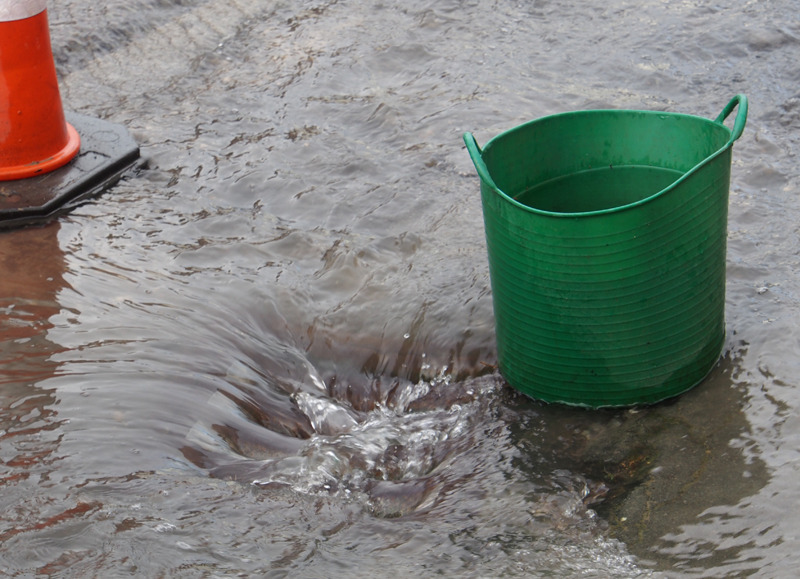 This year in Aldbourne things can only get better – but first they may get worse if Friday’s rain is as heavy as forecast.


