





Finding a graduate job is getting tougher and tougher, and living outside of a major city only complicates matters.
‘Work hard at school, get into a good university, get a good degree and doors will be flung open for you; the only difficulty will be choosing which career suits you best.’ This was the message I and so many others my age received throughout our childhoods from parents and educators. For me, like so many others, that promise has not (so far) worked out as expected. I graduated with a ‘good’ degree from a Russell Group university last summer but after 6 months, numerous cover letters and hours re-formatting my CV, it feels more like trying to force a door open than choosing which one to walk through.
Of course, my parents and teachers were not to know that the job market would be in its current state. It’s been widely reported that a combination of economic uncertainty, political instability and AI have led to far fewer jobs for a rising number of graduates. Applications per graduate vacancy now stand at a record high of 140.
The job market has become so competitive that sending job applications doesn’t even yield responses let alone offers for many graduates. Fabian Avis, ex-St John’s student and recent Sheffield University graduate who now works as an architectural assistant in London said that he received “far better response rates from speculative applications because often they had seen fewer applications or were about to post a job vacancy”. He added that it took him around 60 applications, the majority of them speculative, to secure a position.
For graduates living outside of London and major cities where opportunities are concentrated, finding a job can sometimes feel like a postcode lottery. With fewer graduates going straight into employment, more are returning to their family homes meaning opportunities are often dictated by where your parents live rather than where is advantageous for your career.
Wiltshire is by no means the most isolated part of the UK and is within reach of London and other cities like Bristol and Reading, meaning travelling for interviews or even commuting is possible. However, local graduates still feel cut off from opportunities.
A 2023 graduate told Marlborough.news “I was fortunate enough to get offered a temporary role as I graduated but after that time period was over, I was left in my hometown with a lack of career support from my university. Being in such a rural area, it is difficult to find a position that feels right post graduation. There are so many people at the same time of life and so few roles to be filled that you find yourself newly graduated but sifting through jobs at supermarkets and in hospitality, often those jobs that we had left three years previously to attend university. The job market is difficult both post-graduation and in general. Especially for those of us in rural areas.”.
Living in a rural area also comes with financial constraints for graduates. Living outside a major city can make taking low-paying, early careers jobs like internships difficult.
Internships are increasingly a route into employment, with over half of graduates now completing at least one. However, 43% of internships and placements are located in London. And, according to data from The Sutton Trust, 61% are unpaid or paid at less than minimum wage. A day return to London from Marlborough’s closest railway station, Bedwyn, currently costs £56.10 with a young person’s railcard, putting weekly commuting costs at upwards of £280. Thus, many internships are simply unaffordable for graduates in Wiltshire and other rural areas, making the first step in a career even harder.
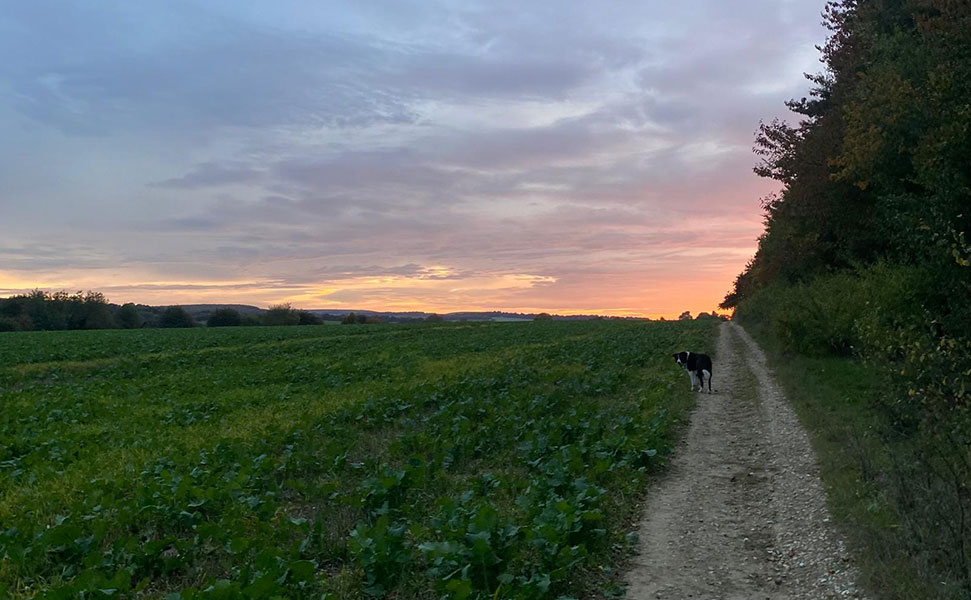
However, whilst the current graduate job market may be discouraging, as Fabian Avis commented, “solace can be taken in the fact that it seems hard or challenging for most people”. And there are, after all, worse places to be ‘stuck’ than in a peaceful market town surrounded by beautiful countryside; I would be lying if I said I hadn’t enjoyed the unexpected extra time with my family and the dog…
 Rotary provides much needed support for Julia’s House Children’s Hospice


