




 The sun glinted on the instruments of the Phoenix Brass Band as its red-coated members heralded this year’s Remembrance Day parade to Marlborough’s war memorial.
The soldiers of the 4Military Intelligence Battalion in their green berets, a Gurkha hat or two among them, snapped to attention and marched behind to the proud beat of the big base drum.
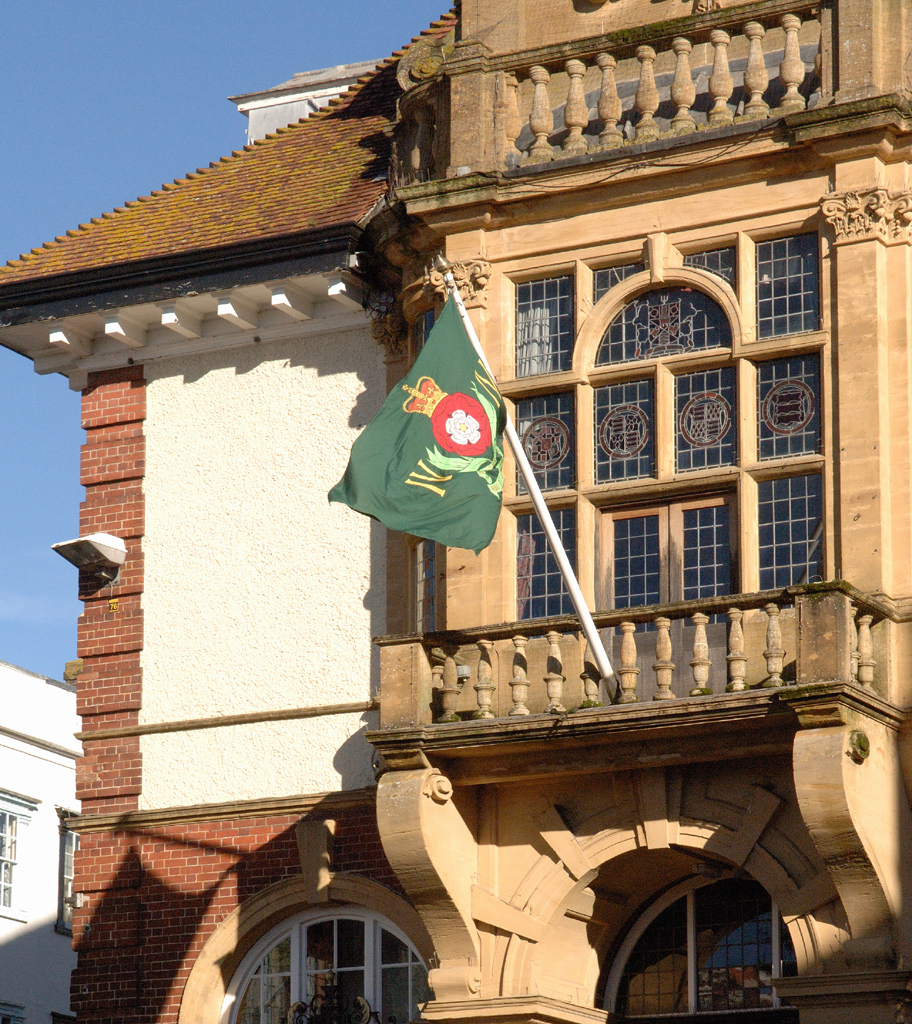
And behind them came the phalanx of old and young, the veterans of the British Legion, their hard fought for medals on their chest with their standards flying as they passed the town hall.
Then came a host of other organisations, the cadets of the Army and the RAF, the Scouts, Guides, Cubs and Brownies, some tiny tots who were to see for the first time Marlborough’s Mayor, Guy Loosmore, lay his Poppy wreath on the memorial and that significant moment when a minute’s silence at 11am across the land paid tribute to the fallen – and the Last Post echoed their sacrifice.
And this year it was, as so often, a special event too on the eve of the centenary of World War I and the staging of an exhibition at the town hall of memorabilia from two conflicts in which thousands who sacrificed their lives for freedom – and their beloved country.
Even in Waitrose, the ting of the till went silence for those precious minutes, customers and staff, some with heads bowed, honouring past heroes and their own personal thoughts of relatives who never returned.
 A morning of memories indeed, as Marlborough’s very own Special Constable Mike Tupman, awarded the MBE in the New Year honours list, recalled it was his 29th time on parade, this time to lay a poppy wreath on behalf of Wiltshire Police.
“It’s always a very moving occasion, so many people turn out, especially now as Marlborough is allied to the 4M Battalion and the soldiers bring so much to the parade,” he told Marlborough News Online.
While 70-year-old Mike never raised a gun in war, he remembered his father, Cyril, who died 20 years ago, age 80, who served in Burma with the King’s African Rifles during World War II,
“He saw six years of horror, but he never talked about it, stayed silent,” said Mike. “He undoubtedly had a tough time like so many who endured the war, but never, ever said a word once he was back home.”
It was the same for Nick Fogg, twice Marlborough’s Mayor, whose uncle, Clifford Fogg, served with the Sherwood Foresters on the Western Front during World War I.
“He was at Ypres where so many died,” he said. “But he too, like so many, never talked of his experience. And I find that extraordinary.”
Councillor Fogg was reviving memories at the town hall exhibition of remarkable local memorabilia now being staged to mark the centenary of World War I. And he recalled too that his own father, Edward, served in the Eighth Army that defeated the Germans under Field Marshal Rommel in the Western Desert.
Rommel was a man admired and respected by his own troops and enemies alike, but not by the German and Italian soldiers who dug in at Monte Cassino, a hilltop village with a Benedictine monastery, in what is known as the Battle for Rome between January and May, 1944.
It took four assaults – and casualties of 2,200, before they were swept aside, partly by aerial bombardment, partly by the soldiers of the Second Polish Army, to which Edward was seconded as a signals operator.
“If you call the Western Desert and the Battle of Monte Cassino a tough time, them my Dad probably did have one, along with the Sicily landings,” added Councillor Fogg.
“But if you talked to my father about the war, all you would get was the impression that there was no fighting whatsoever. It was all about the black markets in Italy. My father never, ever talked about killing people.”
 The most poignant story came from Marlborough’s Rector, the Rev Canon Andrew Studdart-Kennedy, whose grandfather, the Rev Geoffrey Studdert Kennedy, was one of the heroes of World War I, a volunteer chaplain who won the Military Cross for bravery.
“He went by the nickname of Woodbine Willie because he handed out Woodbine cigarettes to injured and dying soldiers in the trenches,” he told Marlborough News Online.
“He was awarded the Military Cross for his bravery under fire by running into no man’s land to collect morphine for an injured soldier. This was Messines Ridge during an attack on the German frontline.”
He originally had a parish in Worcester and became famous too as a World War I poet, his experiences appearing in two books, Rough Rhymes of a Padre in 1918 followed a year later with a sequel of More Rough Rhymes.
During the war he supported the British military effort with enormous enthusiasm. While attached to a bayonet-training service he toured with boxers and wrestlers to give morale-boosting speeches to the troops about the usefulness of the bayonet.
“When he came home at the end of the war he spent the next 10 years as an itinerant preacher,” added the Rector. “He died in 1929 at the age of 45 and unfortunately I never met him.”
Click any pic to enlarge


 Bringing fluency to young people’s speech – the Swindon way

