





 After several months running the commissioning of Wiltshire’s NHS services as a ‘shadow’ organisation, Wiltshire Clinical Commissioning Group held its inaugural meeting on Tuesday (April 2) two days after the demise of NHS Wiltshire – the Primary Care Trust (PCT.)
“It is”, said Dr Stephen Rowlands, the Trowbridge GP who chairs the CCG, ”our first day actually sitting in the driving seat.”
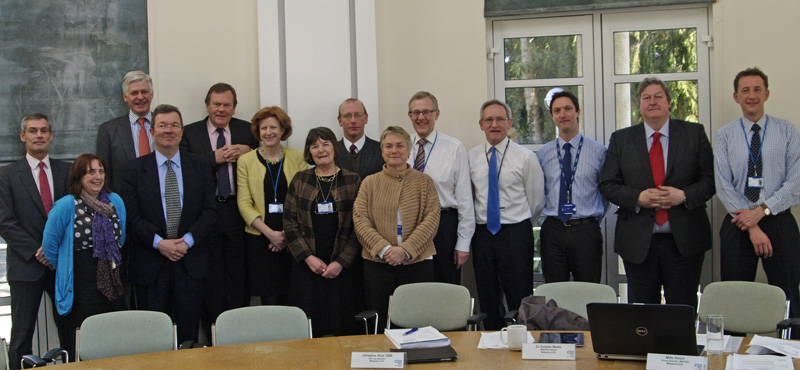
This was a formal meeting attended by most of the GP board members [see photo below.] They were signing off the transfer of the PCT’s assets and the CCG’s 183-page constitution.
The transfer of assets is not quite complete – waiting for a few corrections by the Department of Health. But it includes some interesting items: the CCG will be responsible for 959 computer workstations in the county’s surgeries and other healthcare centres, as well as another 92 computer workstations at its headquarters in Devizes.
It has been a very complex dividing up of assets – rather like a divorce settlement. But there was probably little dispute over the “seven coat hangers” that are moving from the PCT to NHS Property Services Ltd.
Much more seriously, the constitution has undergone some additions since the draft version Marlborough News Online reported on in January.
As Dr Rowlands noted, there has been a great deal of press coverage of the possible conflicts of interest that may arise when GPs are buying treatment and care services from their own surgeries or from companies in which they have an interest.
The constitution has an added paragraph: “Where all or most CCG decision makers have or may have a material interest in the decision, the decision may be referred to the CCG governing body. The [Wiltshire Council run] Health and Wellbeing Board or another CCG may also be invited to review the proposal.”
This first meeting of the CCG was told that a new register of interests for all those involved in the CCG was being drawn up and would be published before the Governing Body’s next meeting later in April.
The constitution also confirms how the CCG’s three ‘locality groups’ will operate. They are Sarum for the south of the county, WWKYD for the west, and NEW (North and East Wiltshire) which includes our area.
Two members of the public, June and Walter Nelson from Chippenham, came to the meeting to ask about the poor level of dementia treatment in Wiltshire. They had come to the right place as quicker and better diagnosis and treatment of dementia has been the CCG’s first major initiative.
Dr Celia Grummitt from the Sarum locality of the CCG, explained how the pilot she had run had included GPs working on diagnosis and prescribing – as well as taking back into their care more stable patients. Funding was now available and training for GPs would be rolled out across the county in the next two months.
Dr Grummitt said: “We are really hopeful that in the next six months you will see a dramatic change.”
NHS 111: the new non-emergency NHS helpline that is replacing NHS Direct is now live in half of the contract areas across England – though some of these still have NHS Direct running in tandem as back-up. The countywide service was supposed to go live by Monday, April 1 – some areas will not now go live until June.
The decision as to whether the Wiltshire service should be allowed to go live has been delayed until later this month. However, minutes of the Wiltshire Clinical Commissioning Committee’s meeting on March 19 show how seriously the state of the local NHS 111 contract with the private company Harmoni is being considered:
“The members expressed their deep concern about the provider’s capability and capacity to continue to deliver the contract going forward, particularly with a Bank Holiday weekend ahead, and discussed alternative plans for the next course of action based on the least risk.”
Click to enlarge.
 Passengers galore will either move out of the area or take to their cars without rail electrification


