





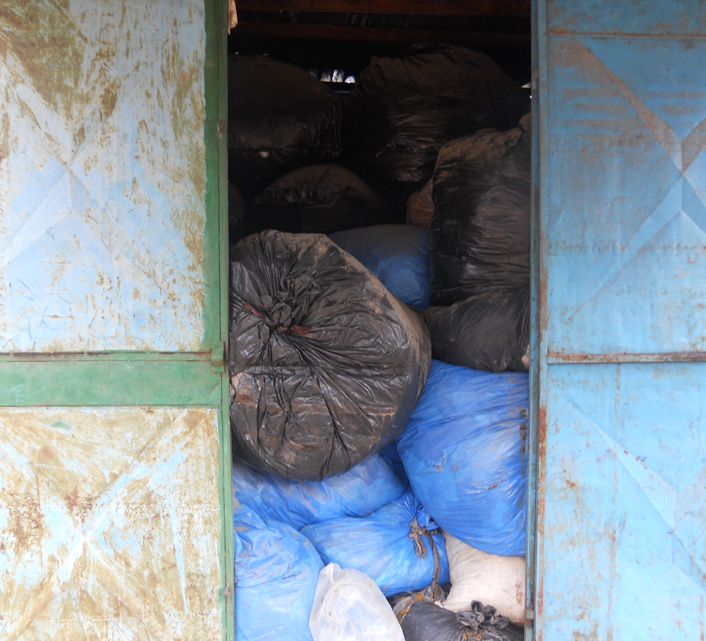
 Their idea worked really well on a kitchen stove in Wiltshire – with easily controlled heat. Could five year-ten Pewsey Vale boys make it work as the basis for a small business in West Africa?
This was not cooking – there was no Bake Off cliff-hanger here. This was turning waste plastic bags into roof tiles.
If that sounds like one of the weirder Dragon’s Den proposals, it is not so surprising because it won a Dragon’s Den-type challenge organised by the Marlborough Brandt Group’s Wiltshire Global Education Centre (WGEC).
With funding and support from the Arkleton Trust and its chair, Caroline Higgs, the WGEC ran a contest for secondary schools to find the best viable, sustainable and environmentally friendly business idea that would work well in a West African country.
Five Pewsey Vale students stunned the judges at the ‘hearing’ in Chippenham with their well thought out business proposal to turn the thousands upon thousands of plastic bags that litter The Gambia into serviceable roofing tiles.
Their prize was a ten-day half-term trip to Marlborough’s link village of Gunjur in The Gambia. They would present their business plan and demonstrate their ‘cooking’ method to volunteers of the Nianitama group led by Alieu Darboe who over the past two years have cleared about two-and-a-half million plastic bags from around Gunjur – and changed the face of the village.
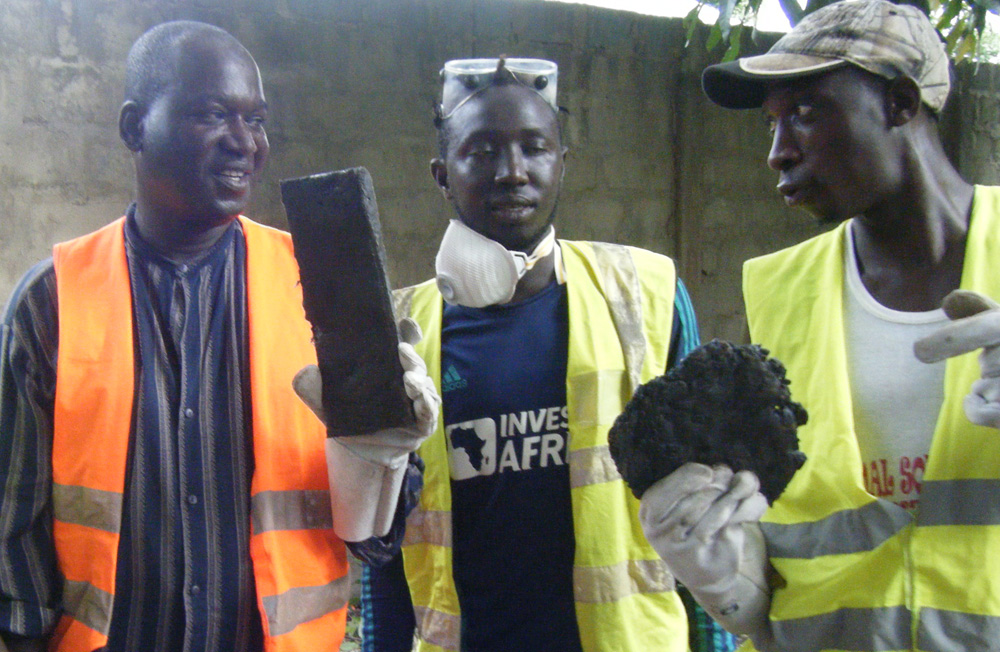 Four members of Pewsey Vale’s winning students went to The Gambia: Robert Boyce, Andrew Gray, Max Knight and Max Young – with WGEC leader Caroline Harmer, Mrs Fiona Burke (the Pewsey Vale teacher who had checked the business plan) and Karen Riordan (head teacher of Brimscombe Primary School which is linked to Gambia’s Kanuma Basic Cycle School and whose teachers have been to Gunjur with MBG.)
The fifth member of the Pewsey Vale group, Charlie Stephens, was unable to go, but will be joining the volunteer squad of St John’s students for their summer working visit to Gunjur.
The recipe for the tile making is straightforward enough: plastic bags, fine sand, some wax and heat. A small amount of wax is used to cover the base of melting pan – it evens out the temperature and prevents the bags from burning.
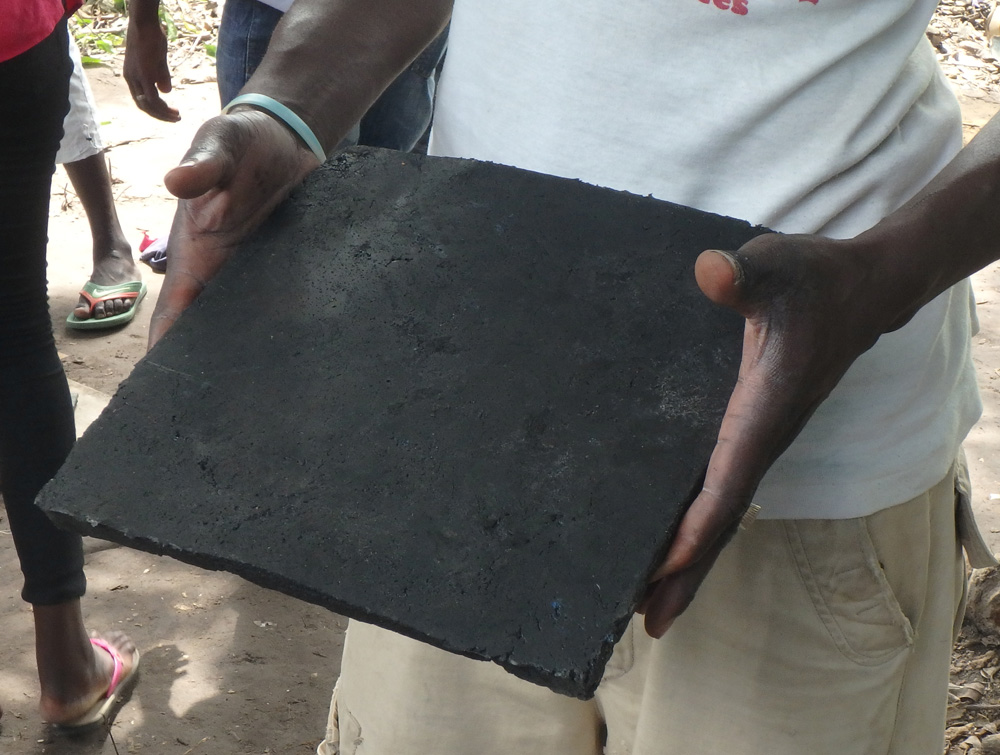 One their first day in Gunjur, it became clear that the fierce heat Gambians use to cook their food over was just too hot. They had to find a ‘slow cooking’ method. By lunchtime a larger cooking pot had been found and very soon, after a few failures and some changes in quantities, Alieu and his volunteers had produced three good tiles – and a new wooden mould to help with production.
They then began experimenting with different finishes and seeing whether the roof tiles could be painted. They have ambitious plans for the project and would love to go into commercial production. However, things move slowly in The Gambia – and the Pewsey Vale Five are learning to be patient!
They have given the Gunjur volunteers a target: if they produce 500 roof tiles of “a saleable quality”, then the students will raise funds in Britain to promote the Gunjur business. As it is the Five have each agreed to take a two per sent stake in the business.
Marlborough News Online asked what the chances were that the business could prosper: “Quite high – the only cost is the fuel for heating the pan and the wax. They’re all volunteers – pretty much everything is profit. There’s lots of unemployment and they’re very interested in our idea.”
The project has stumbled across one hurdle: Gambia’s President Jammeh has, to general surprise, banned the import of any more plastic bags. But it is not that much of a hurdle. First there are millions of plastic bags still waiting to be collected up. Secondly there are other sorts of plastic that could be used – like the ubiquitous plastic water bottles.
While they were in Gunjur the students visited the Basic [secondary] School and got the pupils talking about other ideas for businesses – ideas they could enter into the 2016 challenge. They heard schemes from making shoes out of old car tyres, to set-up a beach bar, to importing and selling WakaWaka solar lamps.
The Pewsey Vale Five’s next step is to produce a video of their roof tile making project and their visit to Gunjur – in the hope that it will inspire young entrepreneurs coming forward for the next competition. 2016’s entries to the MBG/WGEC’s version of the Dragon’s Den will have to be well prepared – the Pewsey Vale Five will be on the judging panel.
Details of the next Global Entrepreneurs Challenge for secondary schools can be found at this web address.
Much of this article is based on the Pewsey Vale Five’s own blogs.

 A Town Hall encore for popular Winter’s Tale with Judi Dench

