






 Archaeologists who have been excavating on National Trust land that is part of the Durrington henge, are now as certain as they can be that they have discovered clear traces of a new and remarkable late Neolithic monument – a great timber circle that once stood tall in the Stonehenge-Avebury World Heritage site.
They are now closing up (Friday, August 12) their trench and the two pits they have excavated. Then their many finds will go to laboratories for the all-important post-excavation phase of the project which may bring certainty and dates to their theories.
The dig – which is only about a hundred yards from Woodhenge – was designed to investigate two of the ‘anomalies’ revealed during a comprehensive geophysical survey using ground penetrating radar and other modern technological aids. One theory was that these anomalies were the remains of standing stones. The opposing theory was that they were pits dug to take large posts.
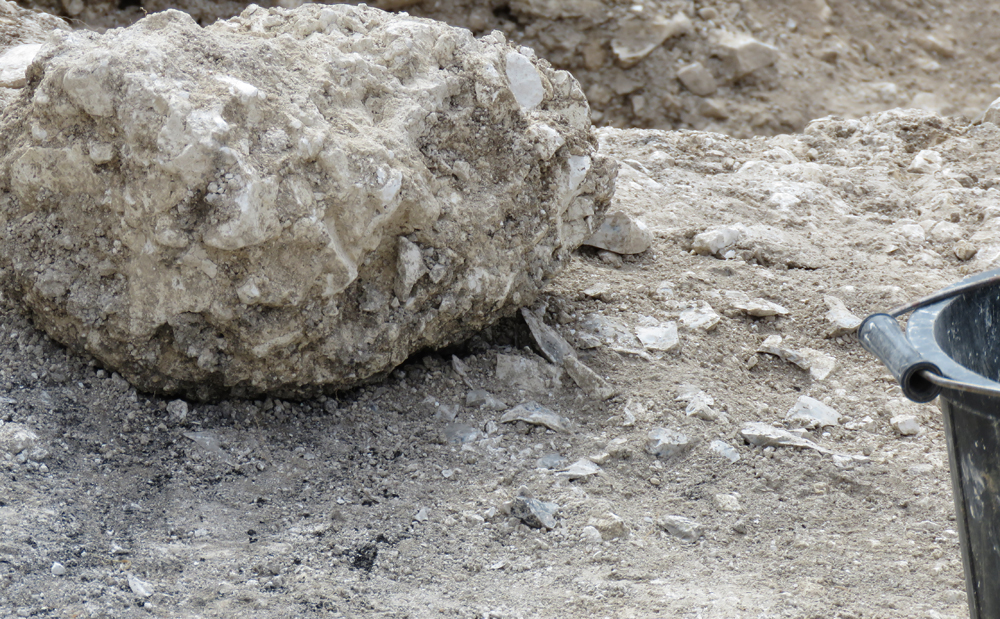
Two large pits have been excavated – each about one-and-a-half metres deep. And it is now clear that both held posts that were about half a metre in diameter and about four-and-a-half metres tall – so standing about three metres above the surface.
Echoes from the ground penetrating radar have revealed at least 120 of these pits – there may possibly be as many as 200. And in the days when the circular henge was complete, there may have been 300 or more.
The National Trust archaeologist Dr Nick Snashall told Marlbough.News: “It’s phenomenal. There was a vast timber monument in a huge arc – it might have been a circle – round the [Durrington] settlement. We wouldn’t have known anything about this without the geophysics survey.”
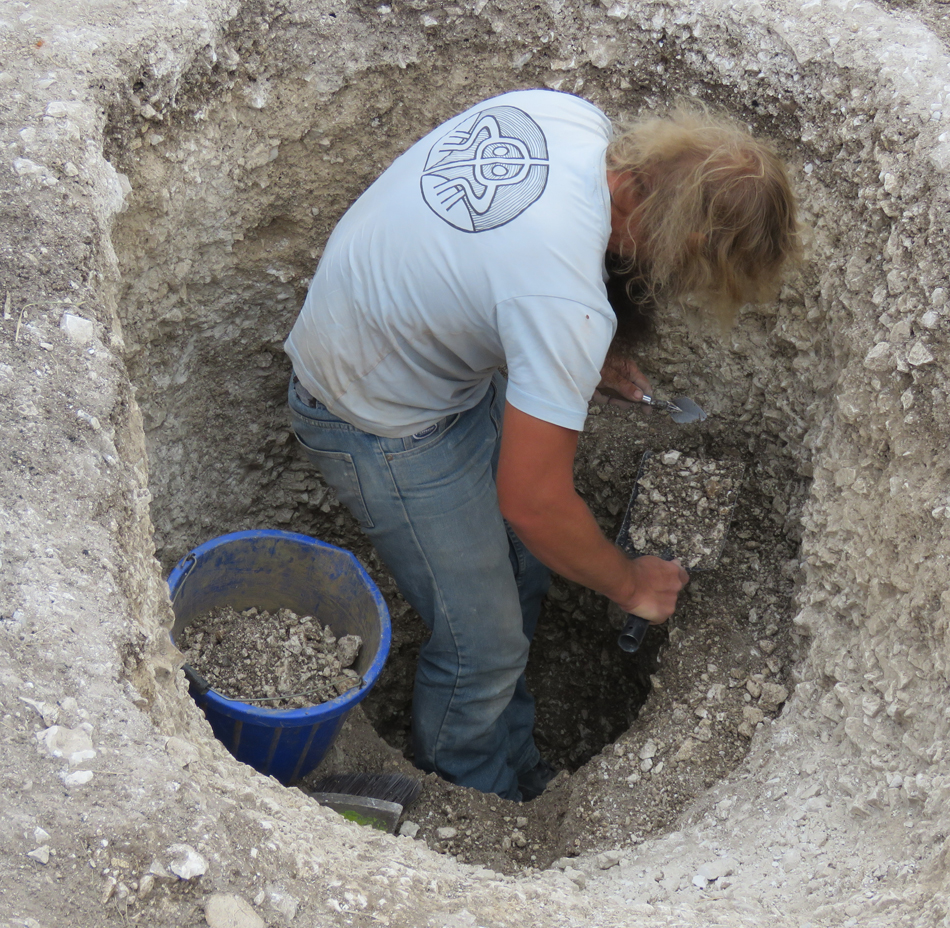
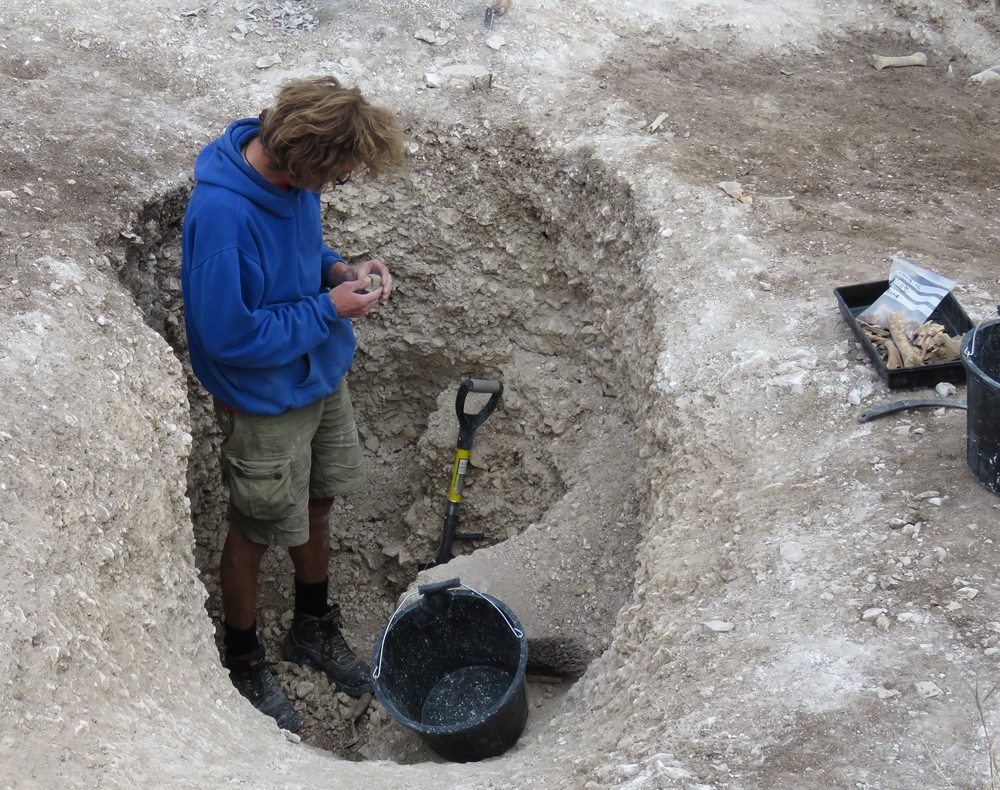
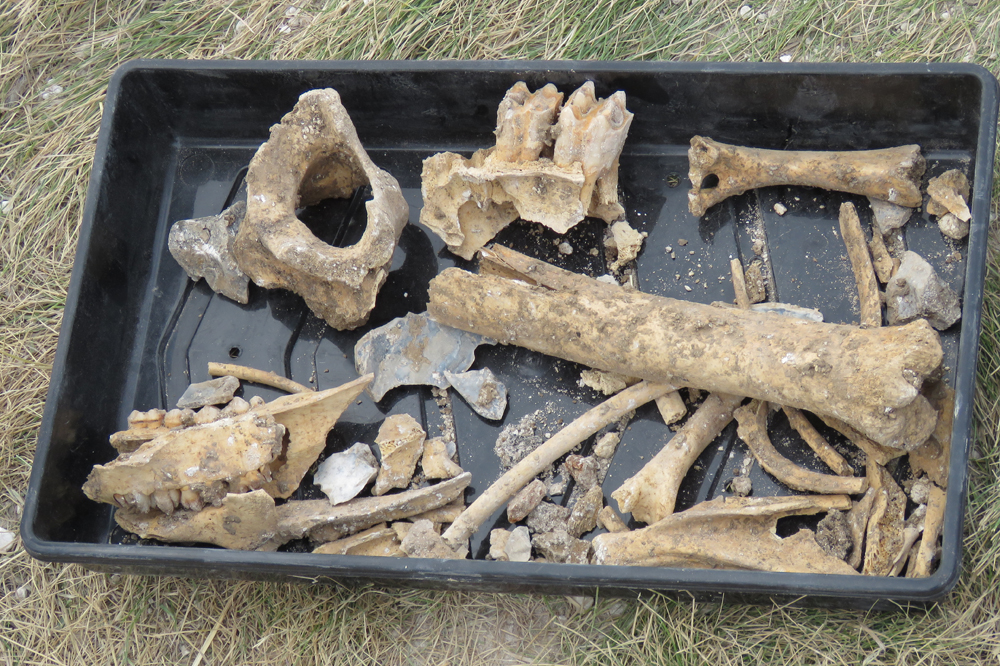
Each pit showed the posts had been packed into place – and some unusual objects placed in the pits like animal bones and a small lump of sarsen and another of iron pyrites. Perhaps some kind of offering?
However the most extraordinary discovery is that posts seem to have been left upright for a short period and then lifted out vertically. How they did this remains a matter for speculation.
![Recording one of the pits [Click on photos to enlarge them]](https://marlborough.news/wp-content/uploads/2016/08/DURR_16_II_RECORDING_ONE_OF_THE_PITS.jpg)
As Dr Snashall pointed out: “These were mature, straight trees put up in a landscape that was very bare – more so than it is today. Where did they come from? And where did they go once they were lifted out?”
Dating of this weird monument may be possible from finds. In one pit there was an antler in the filling that had been put into the empty pit. And in another a cow’s shoulder blade which was unscathed. It would certainly have been crushed into pieces by the post, so it must have slipped into the pit after the post was removed.
As the excavation proceeded various finds were identified and then later overturned. So traces of a Neolithic house that we noted in our first report from the site, turned out not to be the floor of a house at all.
Similarly the part of a second presumed house turned out to be something else entirely. This was just the remains of a large fire and a scattering of flint flakes – perhaps left by someone sitting by the fire knapping flint into an arrowhead.
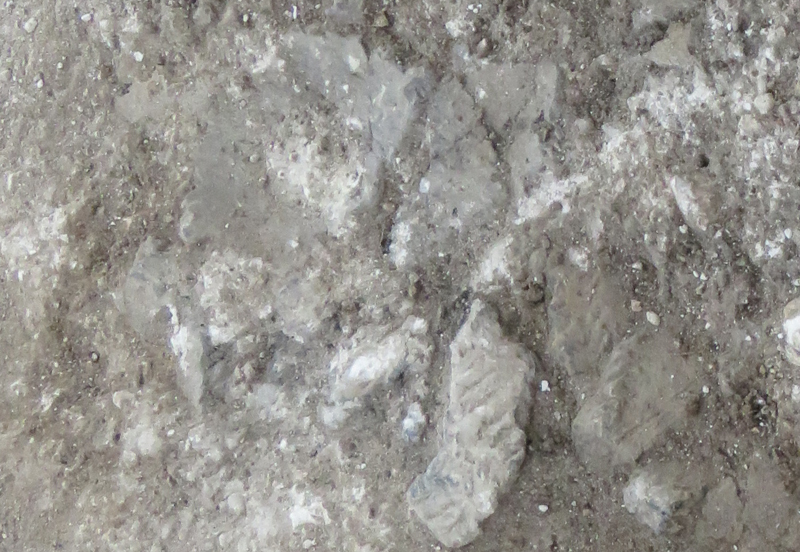
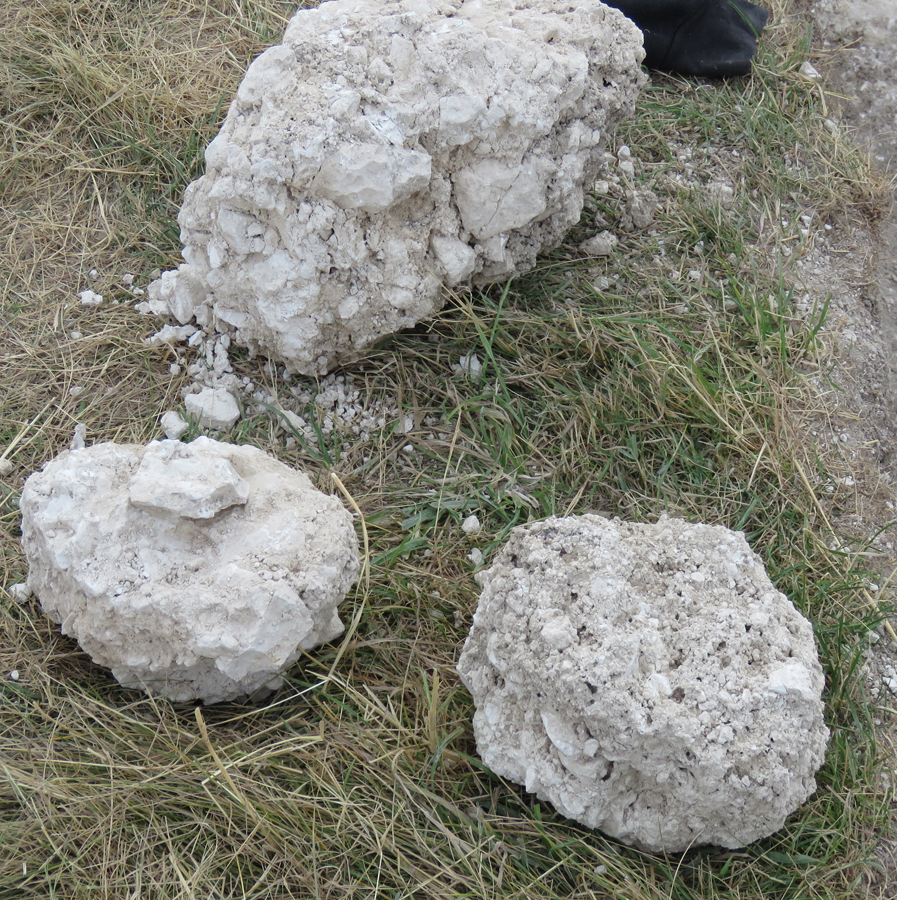
They did however find lumps of chalk cob – a mix of coarse chalk pieces and water – that was probably used round the base of the walls of a house made mainly of woven stems and skins.
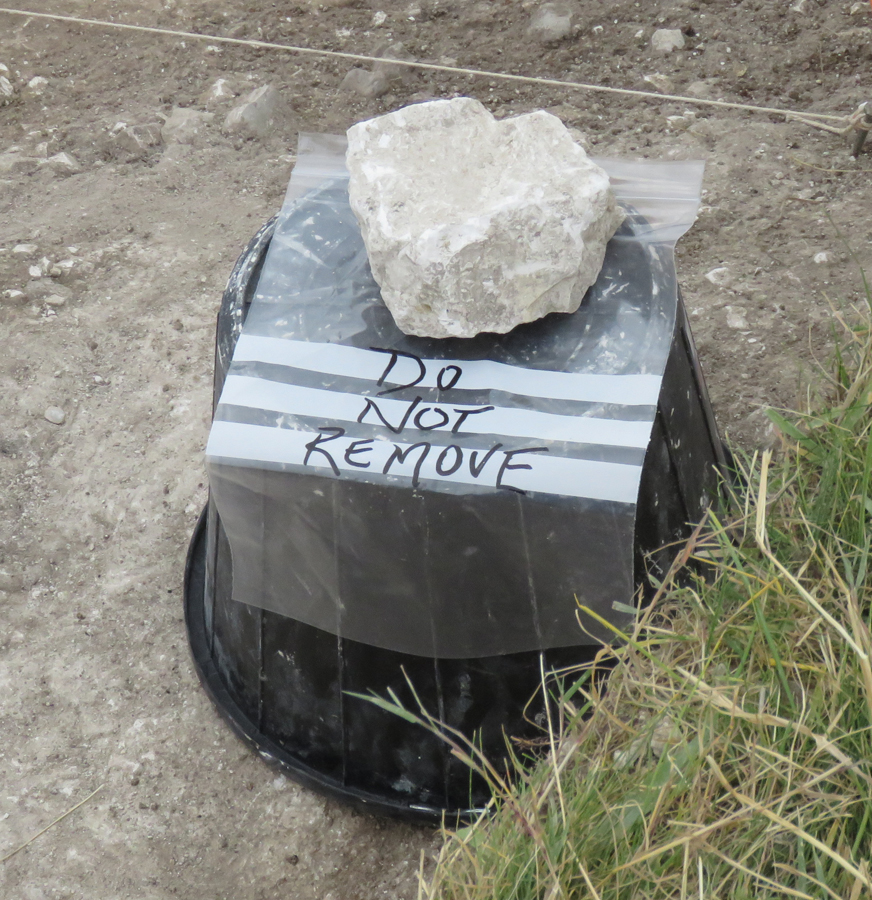
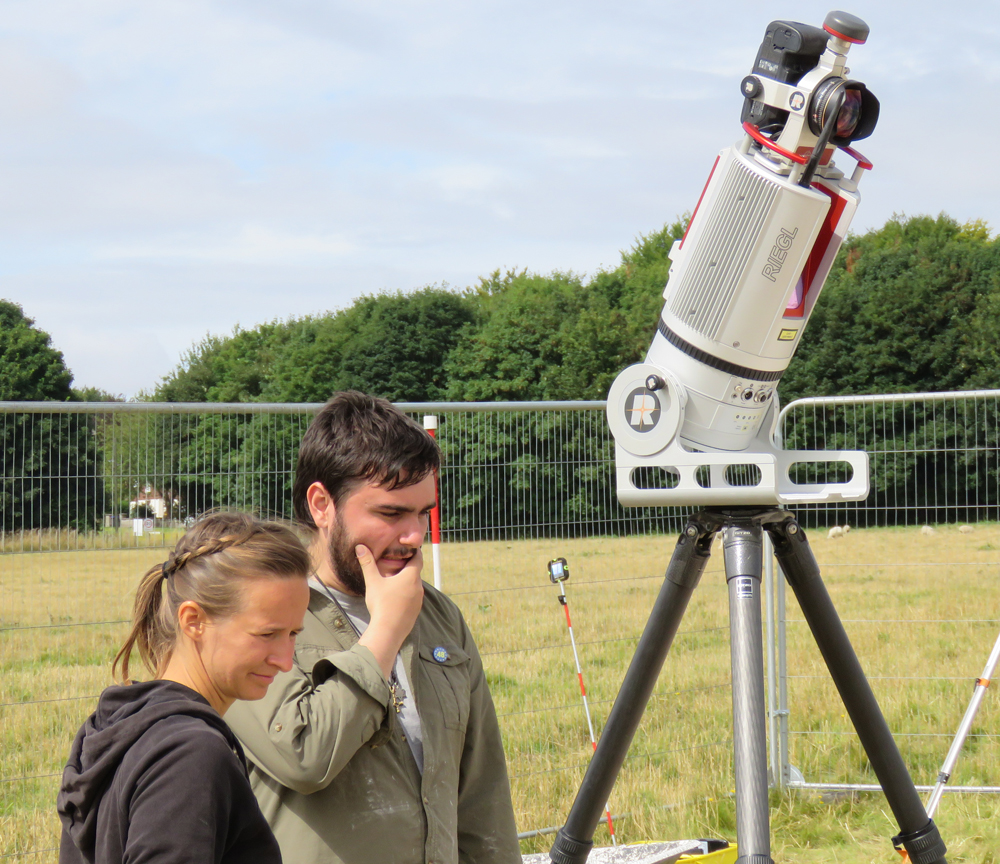
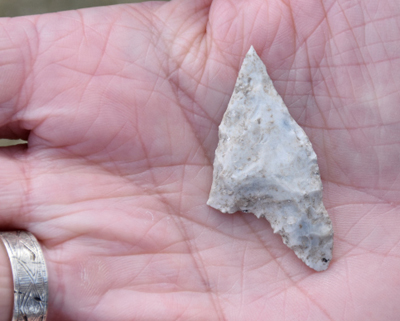
There were other interesting finds including the site’s first British Oblique flint arrowhead – a late Neolithic design. There were also bits of a grooved ware pot and its round base. These fragments have been carefully protected, but will not be lifted out. They will be left – with slight regret on the part of the archaeologist who found them – for the next archaeologists who investigate this site.
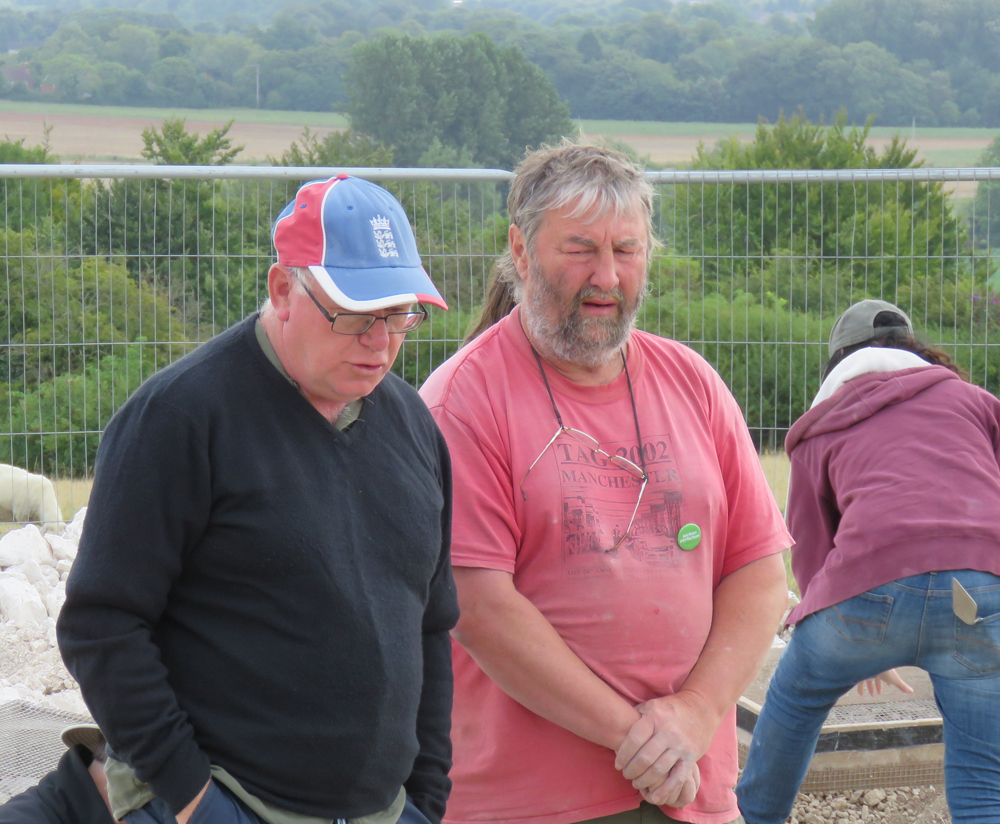 The National Trust have had volunteer guides at the site – welcoming a large number of visitors. Dr Nick Snashall: “More than one parent has commented that they are delighted their children have been allowed inside the fencing to see what we’re doing. It’s been a real pleasure to see children watching, asking questions and be totally engaged – future archaeologists in the making?”
It was Professor Vince Gaffney who thought the earlier geophysics research had indicated broken standing stones. He explains that the excavation has revealed how the pits were filled with packed chalk that had shown on the radar scans as solid matter.
Whoever was right, it seems the order of play at this site was first the creation of the Durrington settlement (for workers at Stonehenge), then the creation of the pits and timber monument, and then the building of the henge over the top of the pits.
That seems to support Professor Mike Parker Pearson’s slightly tongue-in-cheek theory (which we reported earlier) that it is a case either of someone changing monument policy at a very late stage or merely “Neolithic managerial incompetence.”
A full report on this project on the Durrington henge will be made once the results are back from the labs – probably in about six months.
 Striking deals – and golf balls – at networking event


