



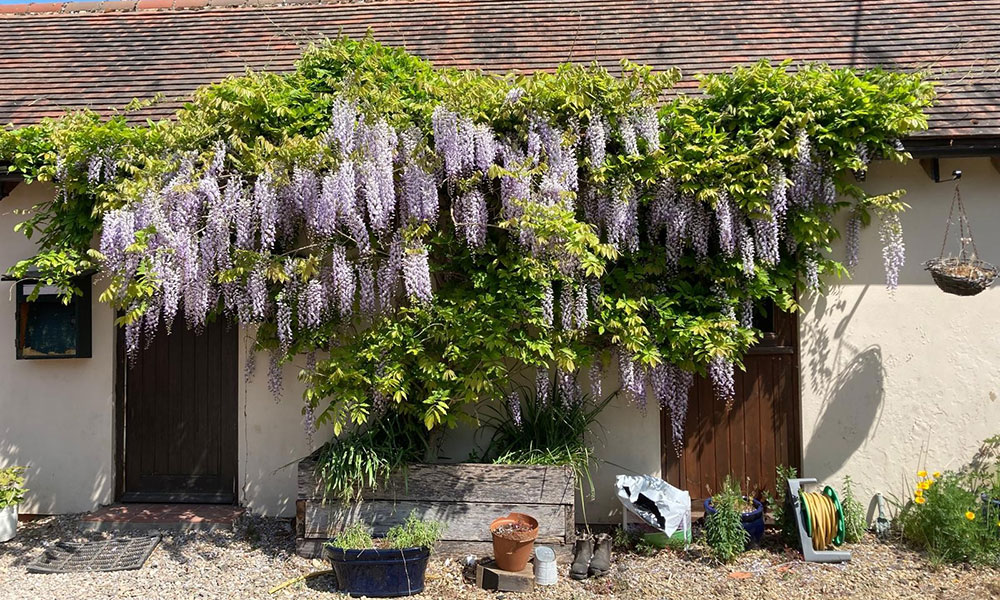
Rats are no further away from any of us than 15ft. That has been a long-held belief although based on more urban environments than Baydon. In rural settings that may still hold but we know that there are lots of them, everywhere and being generally nocturnal we don’t see them – often. Rats are a pest, no-one wants them but they are all around us although keeping well out of sight during daylight hours. In Baydon a Marlborough.news viewer has been ordered to cut down a mature and beautiful wisteria adorning the side of a property as Wiltshire Council have decided that rats are using it as a climbing frame.
OK, ‘climbing frame’ are our words, not those of Wiltshire Council but the resident with the wisteria in Baydon is adamant that a nearby rat problem is not due to their wisteria being used as a longer route for rats to travel. There are other obvious and quicker (easier?) routes for the rats.
Wisteria adds character to any property and when it blooms in the late Spring and Summer, it can add something that no other plant or adornment ever could. And that is why the resident is adamant not to cut this beautiful and mature plant back to less than a foot in height. That would destroy the character of the building.
Rather than run down a drive the rats (apparently) climb the wisteria, make their way into a roof space, venture through there to where they want to go. The owner with the wisteria cutting enforcement order has employed several separate independent pest control experts including Rod Smith, of Humane Pest Control Solutions who put in cameras and tracking dust to establish whether the rats actually do use the wisteria as their ‘motorway’. His terriers also didn’t pick up any evidence of rats, so Rod, a well respected expert, who ironically also does work for Wiltshire Council, National Trust and many other major organisation is “100% certain that the wisteria is not the cause of any rat problem”. He also added that the situation, with this small wisteria plant is “comical”. But Wiltshire Council think otherwise.
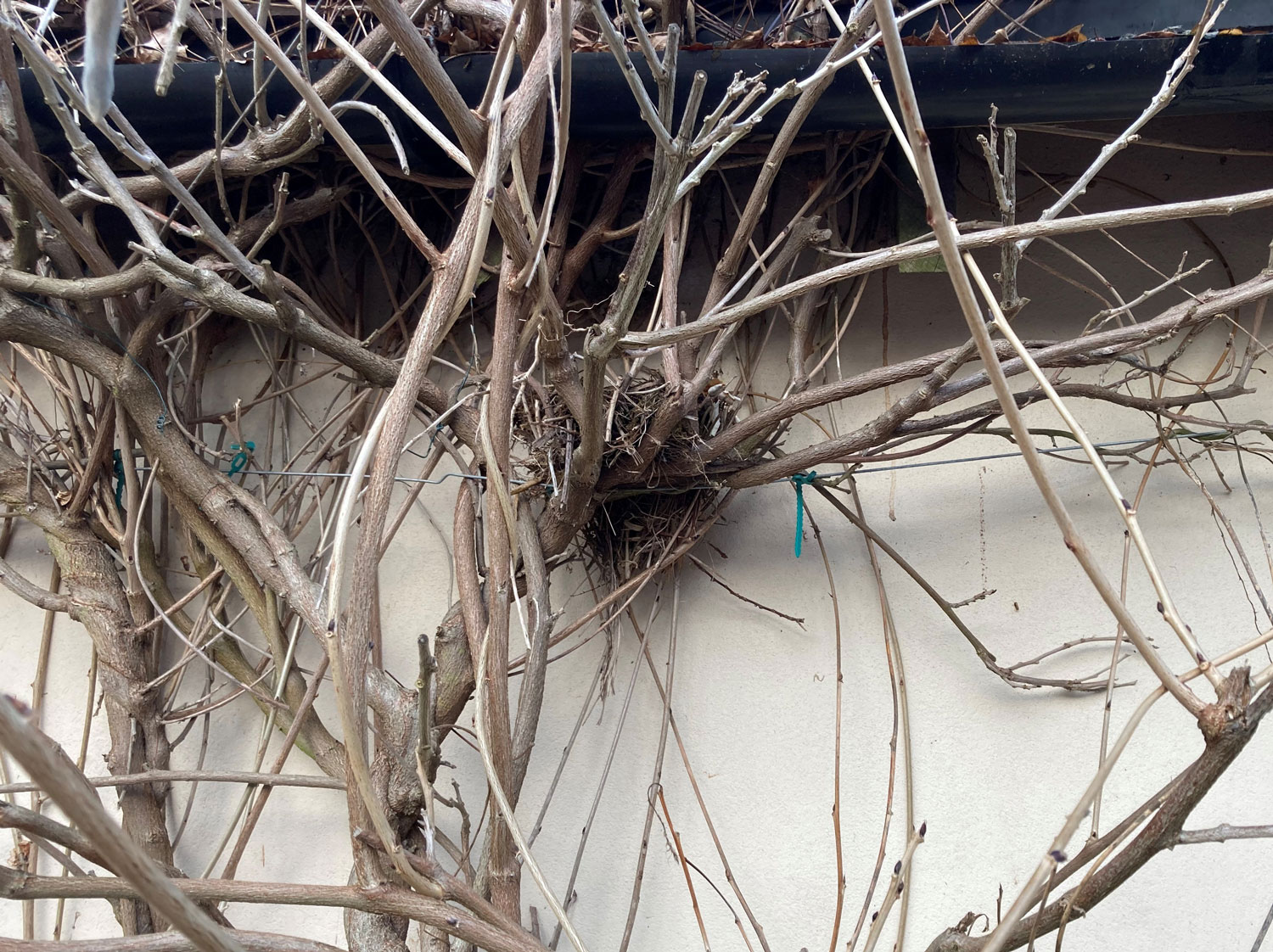
In the wisteria there is a blackbird nest. This has been used by blackbirds more than once in the same season and if rats were running up, down and through the plant then the eggs would be a prime target. These eggs don’t get eaten, the blackbirds have used this nest to brood their young successfully for more than one brood.
Rats are attracted by food. And as noted above, bird eggs are food and they don’t seem to have been taken by the rats. No food in the roof space where apparently – according to the Council they walk/run/saunter through.
The resident tells us that recently they have spoken directly with Ian Thorne, leader of Wiltshire Council and that apparently he promised that they would get a right of appeal to this order. But they further state that they had subsequently received an e-mail from an official overseeing this issue that they (Wiltshire Council) would be out in the New Year to check that the wisteria had been cut back as demanded.
Rats. They could become a ‘subject of interest’ for Wiltshire Council in the near future if their proposal to create separate food waste bins turns in to reality. First hand experience in other areas where this has been implemented has coincided with an increase in the sightings of rats, at all times of the day. ‘Coincidence’ is what those Councils have adamantly stated and that food waste bins, out in the street or side passages have no bearing on the visibility and apparent presence of the rat populations. But that’s for another day……
But in Baydon, well before the introduction of food waste bins, whilst the wisteria still grows and enhances the local environment, are the local rats ‘wisteria climbers’? And if this were cut away, would the ‘rat issue’ go away as well? The Council say ‘yes’ but independent pest control specialists say ‘no’. Maybe that ‘right of appeal’ heard properly could create a path forwards for all concerned.
As an aside, the location of this property is in the estate once owned by the great physicist Sir Isaac Newton. We don’t believe it was in Baydon that he either observed, or was hit by the falling apple that led to his theory of gravity – we understand that was at Woolsthorpe Manor in Lincolnshire. But none of his writings refer to either rats or wisteria so back in the early eighteenth Century neither seemed to be such a problem as they are today. And we aren’t aware of any ‘Fourth Newton’s Law of Motion’ (Rats in Wisteria). Or maybe he just didn’t write that one down…….
 Hope and Homes for Children Carol Concert raises bumper funds