






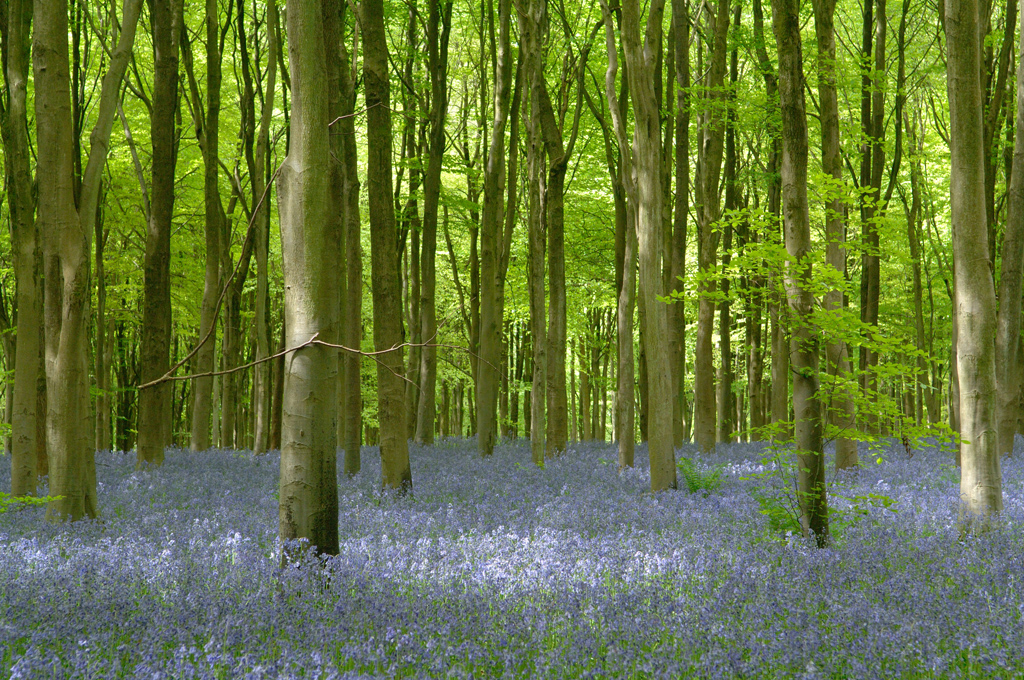
 That brilliant blanket of bluebells in West Woods, on the edge of Marlborough, has failed to materialise this month because of one of the longest and coldest winters on record.
Marlborough’s Lions Club has had to delay the two Sunday bluebell events it organises to raise charity funds for good causes. And according to experts there is a danger of losing the fabulous bluebells altogether.
“Within the next two decades it will become much rarer for people to see a native bluebell wood,” warns Mark Ballard, curator of the Forestry Commission’s National Arboretum at Westonbirt. “They are under threat and the British landscape, however beautiful, is changing.”
The threat comes not from the weather, the culprits being pollution and the invasion by non-native varieties of the Spanish bluebell, introduced a century ago in ornamental gardens, which are less prolific and less colourful.
And they have spread and colonised, the inter-breeding of the two varieties, making the true English bluebell something of a rarity.
The Forestry Commission is taking steps to “stamp out” the Spanish bluebells on its estates. “We’re digging them up where we find them and disposing of them,” says Ballard. “We know what we’re looking for, and what to do about them.
“If people spot hybrids or Spanish bluebells in the wild, they should tell us or the owners of the woods.”
Hugh Angus, a member of the volunteer wildflower group at Westonbirt, adds: “Hybrids can be more vigorous than either parent, but the real problem lies in the fact that once you have a population of nothing bt hybrids, you have lost the original genetic material.
“If the hybrid is then affected by disease and there is none of the original species left, the threat is that the whole bluebell population could be in danger.”
Meanwhile, the Marlborough Lions have postponed their charity events to May 12 and 19, between 10am and 5pm.
“It’s very disappointing because usually we have our first visit at the end of April,” says a club spokesman. “The bluebells are starting to appear now, but there’s not very many of them and they don’t have any colour.
“The warm Bank Holiday weather should help.”
 Claire Perry announces plans to block café wi-fi porn to protect children by the end of the year


